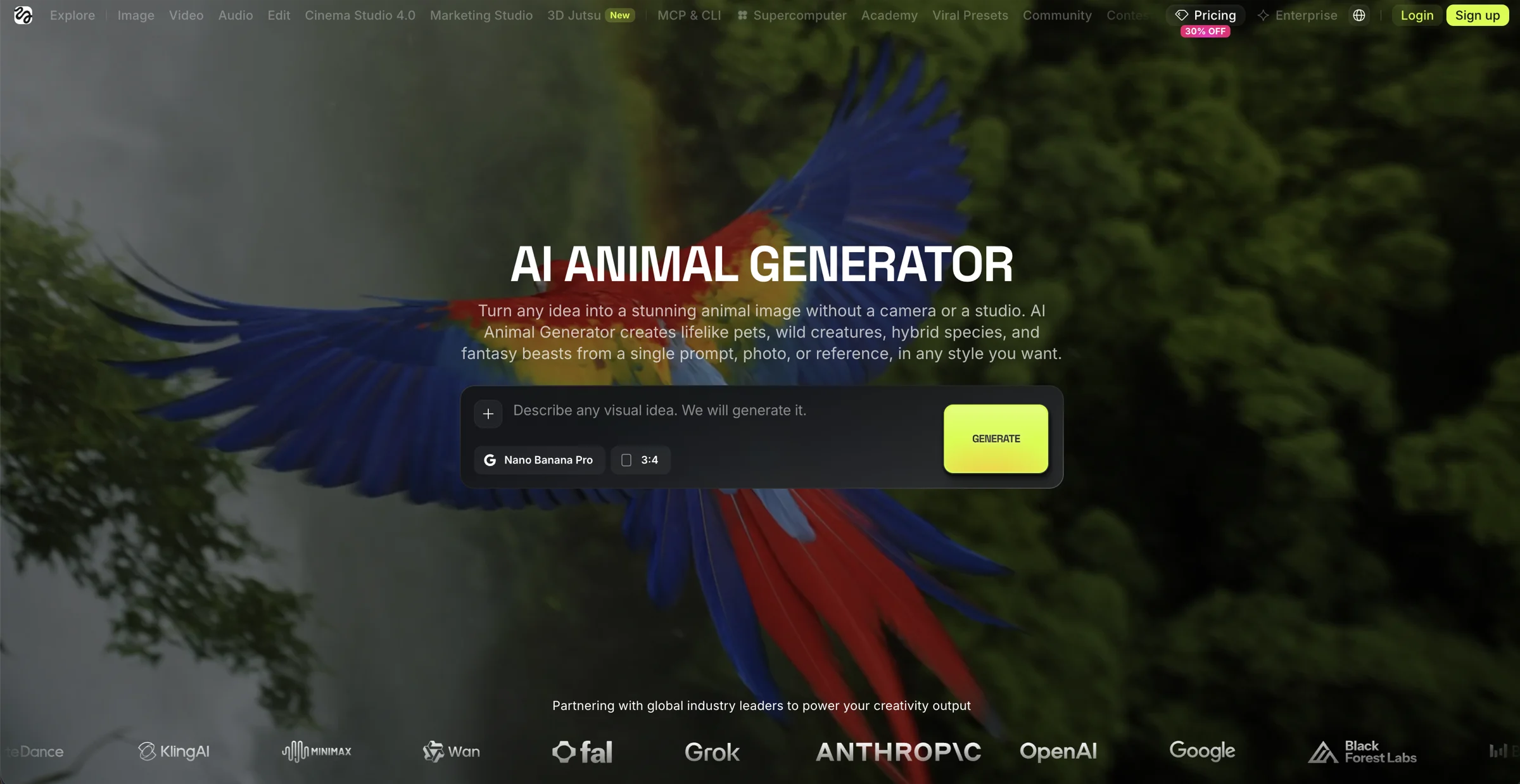
Illustrated and stylized animal art has become a genuinely major trend across children’s content, branding, and decorative design, with creators increasingly turning to AI to produce this kind of work quickly. An AI Animal Generator, one of the tools built into Higgsfield’s platform, is becoming part of how content creators produce original wildlife and pet illustrations, provided that work is genuinely presented as creative art rather than real wildlife documentation.
Why Has Illustrated Animal Art Become Such a Significant Creative Trend Right Now?
The shift here is genuinely well documented in current design coverage. Illustrated and stylized animal art, from watercolor wildlife scenes to geometric pet portraits, has become a genuinely major creative movement, driven partly by a real cultural pull toward organic, nature-grounded imagery as a counterpoint to screen fatigue. This matters for creators because it means animal illustration isn’t a niche interest, it’s a genuinely current, actively growing area of creative demand.
This trend genuinely spans a wide range of actual applications worth noting across creative industries. Children’s book publishers, brand designers, and independent creators are all drawing on the same underlying appeal, animal subjects rendered in a distinctive, illustrated style rather than straightforward photography, meaning the actual market for this kind of content is genuinely broader than any single niche or platform.
What Does Current Guidance From Wildlife Organizations Say About AI-Generated Animal Content?
This deserves a specific, important answer. Organizations that work directly with real animals have raised a genuine, documented concern, when people can’t tell AI-generated animal content from real wildlife documentation, it can blur public understanding of actual animal behavior and welfare, and can divert attention and support away from organizations doing the real work of protecting wildlife. This matters because it draws a clear, practical line between using this technology as a genuine creative tool and using it in a way that could mislead people about real animals.
This same source is genuinely careful to note that the technology itself isn’t the problem, the actual concern is disclosure and framing rather than the tool’s existence. Organizations working directly with real animals have specifically pointed out that AI art can genuinely help visualize extinct species or imagine future habitats in an educational context, meaning the real issue is content presented without disclosure as if it were an actual wildlife encounter, not the creative use of the technology itself in a properly disclosed way.
Why Does This Matter So Much for How Creators Should Actually Use This Kind of Tool?
Given that real concern, the appropriate use for an AI Animal Generator is producing clearly creative, illustrated, or stylized animal art, never content presented or captioned in a way that implies it’s a genuine wildlife photograph or a real encounter that actually happened. This distinction matters enormously for a creator’s own credibility, since content that gets mistaken for real wildlife footage, even unintentionally, can spread genuinely inaccurate impressions of how real animals actually look or behave.
This distinction is genuinely easy to maintain in practice, and that’s worth emphasizing rather than treating this as a difficult constraint for creators to work around. A clearly stylized watercolor fox illustration or a geometric bear portrait is genuinely obvious as illustrated art, the actual risk arises specifically when a photorealistic AI-generated animal image is presented without any indication that it’s synthetic, framed as though it were a real photograph or a genuine wildlife sighting.
What Happens When a Creator Wants Original Animal Illustrations but Lacks Illustration Skills?
This is a real, common challenge for content creators working in this genuinely popular space. A creator might have a genuinely strong creative vision, a specific animal, a particular art style, a specific mood, but without traditional illustration skill or a budget for a professional illustrator, that vision can be difficult to actually produce at the quality and pace a content calendar requires.
This gap tends to be most frustrating precisely when a creator has genuinely clear ideas but no practical way to execute them quickly under real deadline pressure. A creator might be able to describe exactly what they want, a specific fox in a specific autumn scene rendered in a specific watercolor style, but translating that genuinely clear vision into finished artwork without illustration training represents a real skills gap that pure creative direction alone can’t close.
What Are the Traditional Options for Creating Original Animal Illustrations?
Hiring a professional illustrator is one option, and it produces genuinely original, high-quality artwork. Using stock illustration libraries is the more common, budget-friendly alternative, but it means using art that countless other creators and brands are also genuinely using, undermining the originality a lot of animal-themed content actually depends on.
Both traditional approaches carry genuine, real trade-offs worth naming directly and weighing against a creator’s actual content volume. A professional illustrator produces genuinely original, custom artwork, but the real cost and turnaround time involved means most creators simply can’t commission this for every piece of animal content they publish, especially those posting on a genuinely frequent schedule. Stock illustration libraries are accessible and affordable, but the exact same images circulating across countless other accounts genuinely undermines the distinctiveness that makes animal-themed content actually stand out in a crowded feed.
Where Do These Traditional Options Fall Short for Creators Publishing Animal Content Regularly?
The constraint is cost and originality together. A professional illustrator produces genuinely original artwork, but the real cost and turnaround time involved means most creators can’t commission custom illustration for every single piece of animal content they want to publish. Stock illustration libraries are accessible and affordable, but the same images appearing across countless other accounts and brands genuinely undermines the distinctiveness a creator is actually trying to build.
This constraint tends to leave many creators choosing between two genuinely limiting defaults across their actual publishing schedule, month after month. A creator might commission original illustration for a small number of flagship pieces, but the real volume of content most active accounts need to publish regularly simply can’t be sustained through custom commissioning alone, pushing most day-to-day content back toward the same widely circulated stock imagery that undermines the originality a creator is genuinely trying to build.
| Professional illustrator | Stock illustration libraries | AI Animal Generator | |
| Cost | A real, often significant expense | Low, subscription-based | Included in one subscription |
| Genuine originality | High | Low, widely reused | High, described directly |
| Turnaround | Days to weeks | Immediate | Minutes |
| Best suited for | A single flagship illustration | Simple, low-stakes visuals | Regular, varied animal content |
How Does This Kind of Tool Actually Fit Into a Creator’s Actual Content Workflow?
An AI Animal Generator, available through Higgsfield, lets a creator describe a specific animal, art style, and setting and generate a genuinely original illustration within minutes, without needing traditional illustration skill or a professional illustrator’s budget. For a creator publishing animal-themed content regularly, that combination of speed and originality makes it realistic to produce genuinely distinctive visuals for every post rather than relying on the same recycled stock imagery other accounts are also using.
This directly resolves the trade-off described earlier in this piece, for a creator publishing regularly rather than occasionally. Rather than choosing between unaffordable custom commissions for a handful of posts or generic stock imagery for most of a content calendar, a creator can realistically produce genuinely original, style-specific animal illustrations across an entire publishing schedule, matching the actual volume of content most active accounts need without sacrificing the distinctiveness that makes that content genuinely worth following.
What Must Every AI-Generated Animal Illustration Stay Genuinely Clear About?
This is the single most important point in this entire article. Any animal or wildlife content created with this kind of tool has to be genuinely presented as creative, illustrated art, never captioned or framed in a way that implies it’s a real wildlife photograph or an actual encounter that genuinely happened. A feature within Higgsfield’s platform should be used to produce genuinely original creative content, never to fabricate what looks like real wildlife documentation without disclosing that it’s AI-generated. Given that real wildlife organizations have flagged this exact confusion as a genuine, documented problem, keeping that distinction clear isn’t just good practice, it’s what keeps this kind of creative work from accidentally contributing to real public confusion about actual animals in the world.
What Can a Creator Actually Build Beyond a Single Animal Illustration?
Beyond one illustration, the same approach can support building a consistent, genuinely original visual style across an entire animal-themed content account or brand, complementing the kind of practical tool roundups already covered in AI Parabellum’s own guide to top AI tools for content creation, which discusses image generation tools like Midjourney and DALL-E within the broader context of AI-assisted content work. Higgsfield AI is a native AI creative suite, which offers advanced AI image, video, and voice generation, editing, and upscaling tools. This means a creator could also produce supporting animated content from the same animal characters in one workspace.
Does This Replace the Actual Creative Vision and Style Behind a Genuinely Distinctive Animal Content Account?
No, and this matters as much here as anywhere. What actually makes an animal illustration account genuinely stand out is a real creative point of view, a distinctive style, mood, or perspective that a creator has genuinely developed over time. A tool built into Higgsfield’s suite speeds up producing that real creative vision as finished artwork. It does not develop the actual style, generate genuine artistic judgment, or replace the real creative direction that determines whether a body of animal illustration work is actually distinctive or just generic.
What Should a Creator Look for in an AI Animal Generator for This Purpose?
A few things matter more here than for general image generation. The ability to produce a genuinely wide range of art styles matters most, since illustration work spans everything from watercolor to geometric to painterly looks depending on the creator’s actual project and vision. Clear species and pose accuracy matters given that a genuinely recognizable animal is the whole point of this kind of content. And straightforward use matters given that most content creators aren’t professional illustrators.
What Are the Key Takeaways for Content Creators Considering This Approach?
- Illustrated and stylized animal art has become a genuinely major creative trend across children’s content, branding, and decorative design in the current design landscape and beyond into 2026.
- Real wildlife organizations have flagged genuine concern about AI-generated animal content being mistaken for real wildlife documentation, which can mislead people and divert support from real conservation work over time and at scale.
- An AI Animal Generator like Higgsfield helps creators produce genuinely original animal illustrations across a wide range of art styles without traditional illustration skill or a designer’s budget getting in the way of the creative process.
- Every AI-generated animal illustration must be presented as clearly creative art, never framed as a real wildlife photograph or an actual encounter that genuinely happened in the world at any point.
What Are Some Frequently Asked Questions About AI Animal Generators for Content Creation?
Can an AI Animal Generator be presented as real wildlife footage or a genuine animal encounter?
This should never be done, under any circumstances or framing. The tool is meant to produce clearly creative, illustrated animal art, never content framed or captioned in a way that implies it’s real wildlife documentation of something that actually happened.
Does using an AI Animal Generator mean my content will look generic like everyone else’s?
Not if you describe a genuinely specific style, setting, and mood for each piece you create. The tool’s actual value lies in producing original combinations, not identical outputs, so distinctive creative direction still comes entirely from the creator’s own choices and vision.
Do content creators need illustration skills to use this kind of tool?
No. Describing the specific animal, art style, and setting you want is enough to produce a usable illustration without prior illustration skill or software training of any kind whatsoever.
Is this only useful for wildlife content, or does it help pet-focused creators too?
It helps pet-focused creators just as much, since the underlying need, genuinely original, stylized animal art without an illustrator’s budget, applies equally to pet portraits and companion animal content as it does to wildlife themes, regardless of which specific animal category a creator actually focuses on building their audience around from the start.