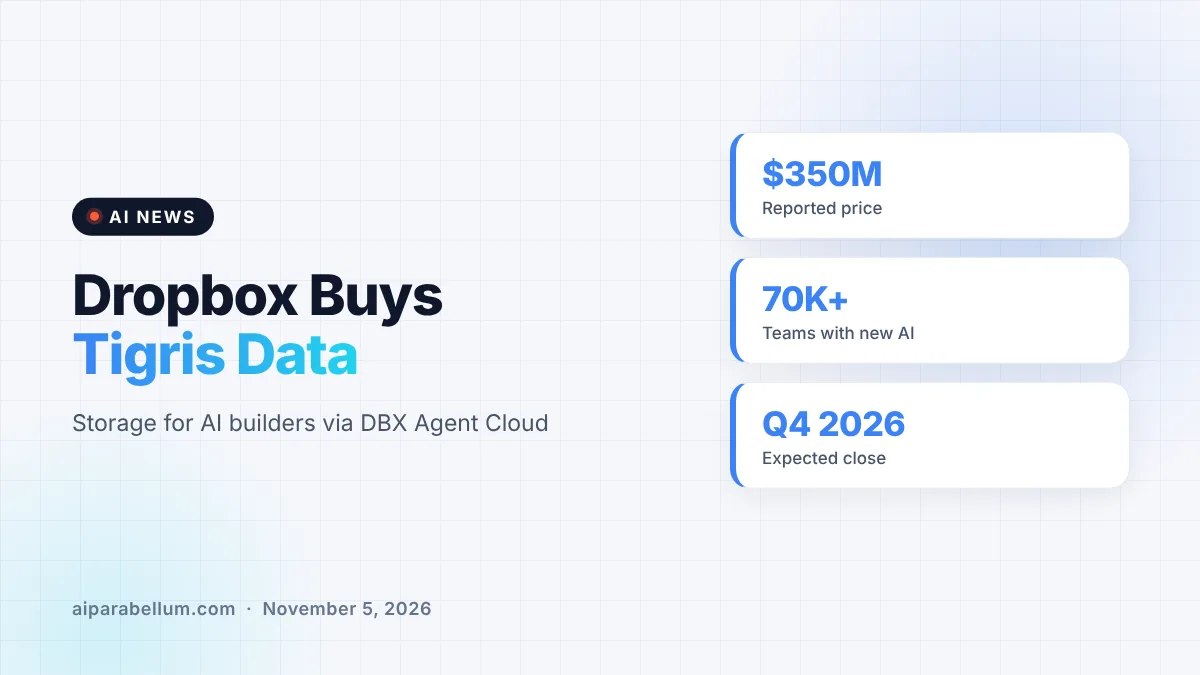
Dropbox is buying Tigris Data, a cloud storage startup built for AI workloads, in a deal reported at $350 million. The Dropbox Tigris acquisition, announced on Thursday, November 5, 2026, looks like the largest purchase in Dropbox’s history. It also signals a clear shift: Dropbox wants to sell storage to the companies building AI apps and agents, not just to people saving files.
The deal sits alongside a big refresh of the main Dropbox app. That update lets users ask AI to take real actions on their files instead of just searching them.
What the Dropbox Tigris Acquisition Includes
Tigris runs a globally distributed object storage service that works with the same API many developers already use for Amazon S3. Its main selling point is that it places data close to the users and computing power that need it, which cuts wait times. It also charges no egress fees, the extra cost many clouds add when you move data out.
Here are the key facts about the deal and the two companies.
| Detail | What We Know |
|---|---|
| Reported price | $350 million |
| Announced | November 5, 2026 |
| Expected close | Fourth quarter of 2026, per Dropbox |
| Tigris founders | Former Uber storage engineers |
| Tigris funding | $25 million Series A last year |
| New Dropbox platform | DBX Agent Cloud |
| Job cuts tied to deal | None planned, Dropbox says |
Dropbox has bought AI-focused companies before, including Reclaim.ai, Promoted.ai and Mobius Labs. None of those came close to this price tag, though.
Why Dropbox Wants Tigris: DBX Agent Cloud
The Tigris technology will power DBX Agent Cloud, a new storage platform aimed at businesses and developers building AI models and AI agents. It will start as standalone object storage that companies can buy on its own, without needing a regular Dropbox plan. Because it speaks the S3 language, existing tools and apps should work with it.
What Comes Next for the Platform
Tigris says Dropbox plans to add two capabilities after the deal closes:
- A filesystem layer, so AI agents can manage files and keep track of their work across tasks and sessions.
- Content processing that turns documents, images, audio and video into inputs AI models can use.
Tigris CEO Ovais Tariq said AI is “driving storage demand at a scale this industry has not seen before.” He also stressed that Tigris will stay a storage layer that works alongside whatever compute or GPU provider a developer picks.
What the Tigris Deal Means for Customers
According to Tigris, nothing changes right away for existing customers. They keep the same product, the same S3-compatible API, the same pricing with zero egress fees, and the same support team. That promise matters because storage customers hate surprise migrations.
Dropbox co-CEO Ashraf Alkarmi framed the move as two halves of one plan. Dropbox brings AI to the files people already store with it, and it now wants to extend its storage know-how to companies building their own AI apps.
New AI Actions Inside Dropbox
On the same day, Dropbox rolled out a major AI update to its main product. You can now describe what you want done, and Dropbox finds the right files, proposes a plan and acts on it after you approve. Supported actions include organizing folders, bulk-renaming files, converting formats, combining documents into PDFs and transcribing recordings.
Dropbox also lets users pick and switch between supported AI models without a separate paid account from the AI provider. It connects with outside tools too, including ChatGPT, Claude, Gemini, Cursor and Copilot. Users can review a record of what the AI did and undo supported changes.
The company says the new experience already reaches more than 70,000 teams. The first rollout covers Standard and Advanced business plans in the US, UK and Australia, in English, with wider availability planned for 2027.
What This Means for You
If you use Dropbox at work, the AI changes are the part you will notice first. If you build AI products, DBX Agent Cloud could become another storage option worth testing. Here is how to think about it:
- Business users on eligible plans should check whether the new AI actions are turned on, since they can save time on folder cleanup and file prep.
- Always review the plan the AI proposes before approving, especially for bulk renames or moves.
- Developers on Tigris can keep working as usual, but watch for pricing or terms updates once the deal closes.
- Teams comparing storage for AI agent workflows should add DBX Agent Cloud to their shortlist once it launches more widely.
This also fits a bigger pattern in the industry, where file and data companies race to become the place AI agents read from and write to. You can follow more of these moves in our AI news coverage and see related tools in our list of AI business tools.
Sources
Primary source: Tigris acquisition announcement. Additional details from Dropbox’s fall launch post and reporting by TechCrunch.
Conclusion
The Tigris deal shows Dropbox betting that AI will need a huge, flexible place to keep its data. By pairing Tigris with DBX Agent Cloud, Dropbox is trying to sell storage to AI builders while also adding AI actions for everyday users. The deal still has to close, and the new platform starts small with object storage. But if the planned filesystem and content tools arrive, Dropbox could become a real player in AI infrastructure rather than just a file locker.