You paste a URL into an AI SEO tool, wait a few seconds, and get back a score, a keyword list, and a neat pile of recommendations. It feels like magic. It isn’t.
Under the hood, these tools run your page through a pipeline of very specific steps. Once you know what those steps are, the scores stop feeling mysterious and start feeling useful.
Step One: The AI SEO Tool Has to Fetch Your Page
Before any analysis happens, the tool needs to see your page the way a search engine crawler does. That sounds simple, but there are actually two versions of your page. And they don’t always match.
Crawling the Raw HTML
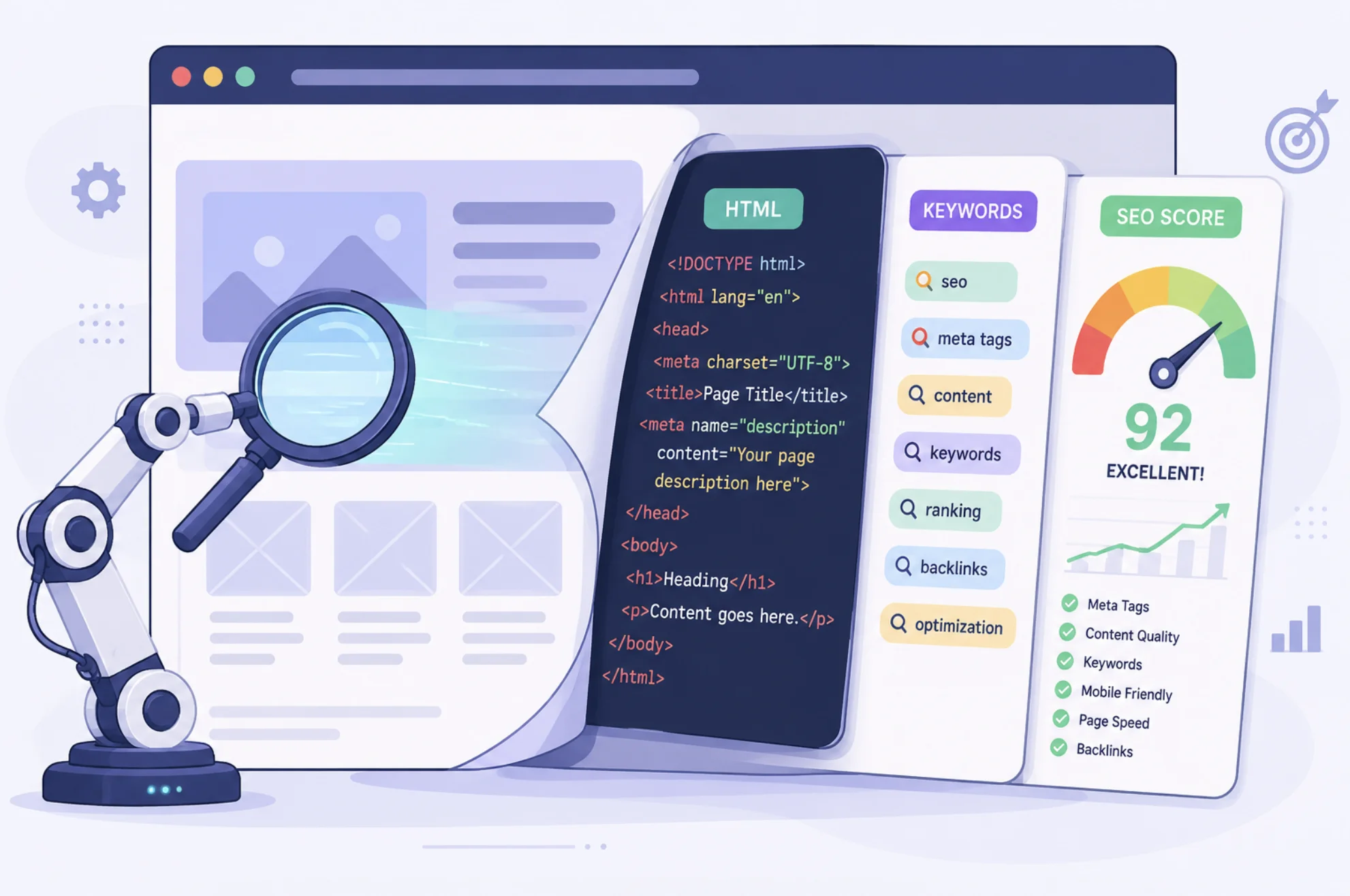
The first pass grabs the raw HTML your server sends back. From that source code, the tool extracts the elements that carry the most SEO weight.
<title>Best Running Shoes for Flat Feet (2026 Guide)</title>
<meta name="description" content="Find the right pair...">
<h1>Best Running Shoes for Flat Feet</h1>
The title tag, meta description, headings, image alt text, and structured data all get pulled out and checked in this pass. Missing pieces get flagged immediately.
Rendering JavaScript Like a Real Browser
Modern sites often build content with JavaScript after the page loads. So better tools run a second pass using a headless browser, which loads your page like Chrome would.
The tool then compares the rendered page against the raw HTML. If your main content only appears after rendering, that’s a crawlability risk worth knowing about.
How AI SEO Tools Read Your Content
Here’s where the AI part earns its name. Older page checkers just counted keywords. Today’s tools use natural language processing to understand what your page is actually about.
Natural Language Processing Breaks Down Your Words
NLP models split your content into sentences, phrases, and parts of speech. Then they map those pieces to topics and measure how deeply you cover each one.
This is why thin content gets caught even when it’s stuffed with keywords. The model can tell the difference between mentioning a topic and explaining it.
Entities and Topics, Not Just Keywords
Modern analysis leans on entities, which are the real-world things your content mentions. People, products, places, and concepts all count.
If you’re writing about espresso machines, the tool expects entities like pressure, grind size, and portafilters to show up. Their absence signals shallow coverage.
From Keyword Density to Semantic Relevance
Many tools convert your text into embeddings, which are numerical fingerprints of meaning. Your page’s fingerprint gets compared against pages that already rank.
Bill Gates saw this coming back in 1996 when he wrote, “Content is king.” The tools have simply gotten much better at measuring what good content looks like.
The On-Page Signals Every Analysis Covers
Beyond the language itself, AI SEO tools run through a checklist of on-page SEO factors. The usual suspects include:
- Title tag length, placement of the primary keyword, and click appeal
- Heading hierarchy, from H1 down through subheadings
- Internal links and how well they connect related pages
- Image alt text and file size
- Structured data markup, like schema for articles or products
- Readability, sentence length, and paragraph structure
- Page speed signals and Core Web Vitals data
Each signal feeds into the overall grade. No single item makes or breaks the score, but weak spots stack up fast.
How the Scoring Actually Works
Most tools don’t judge your page in a vacuum. They analyze the top-ranking pages for your target keyword and build a benchmark from them.
Your content score reflects the gap between your page and that benchmark. Peter Drucker’s old line applies perfectly here: “What gets measured gets managed.”
| Analysis Layer | What the Tool Examines | Why It Matters |
|---|---|---|
| Technical | HTML structure, rendering, speed, mobile display | Search engines must crawl and index the page first |
| Content | Topics, entities, depth, readability | Relevance decides whether the page deserves to rank |
| Competitive | Top SERP results, content gaps, shared subtopics | Rankings are relative, so context sets the target |
That competitive layer explains why the same article can score 85 for one keyword and 60 for another. The benchmark changed, not your writing.
What AI SEO Tools Still Get Wrong
These tools are helpful, but they measure proxies, not truth. A perfect content score doesn’t guarantee rankings, because backlinks, brand trust, and search intent shifts sit outside the page itself.
They can also push you toward sameness. If every writer optimizes against the same top ten results, every article starts to sound alike.
Google’s own first principle is worth keeping on a sticky note: “Focus on the user and all else will follow.” Treat the tool’s checklist as a floor, not a ceiling.
Conclusion
AI SEO tools analyze a page in three broad moves: they fetch and render it like a crawler, read it with natural language processing to map topics and entities, and score it against the pages already ranking for your keyword. The output looks like a simple grade, but it’s really a comparison between your page and the current winners. Use the recommendations to close real gaps in coverage and structure, then add the original insight no benchmark can measure, because that’s the part readers and search engines reward most.