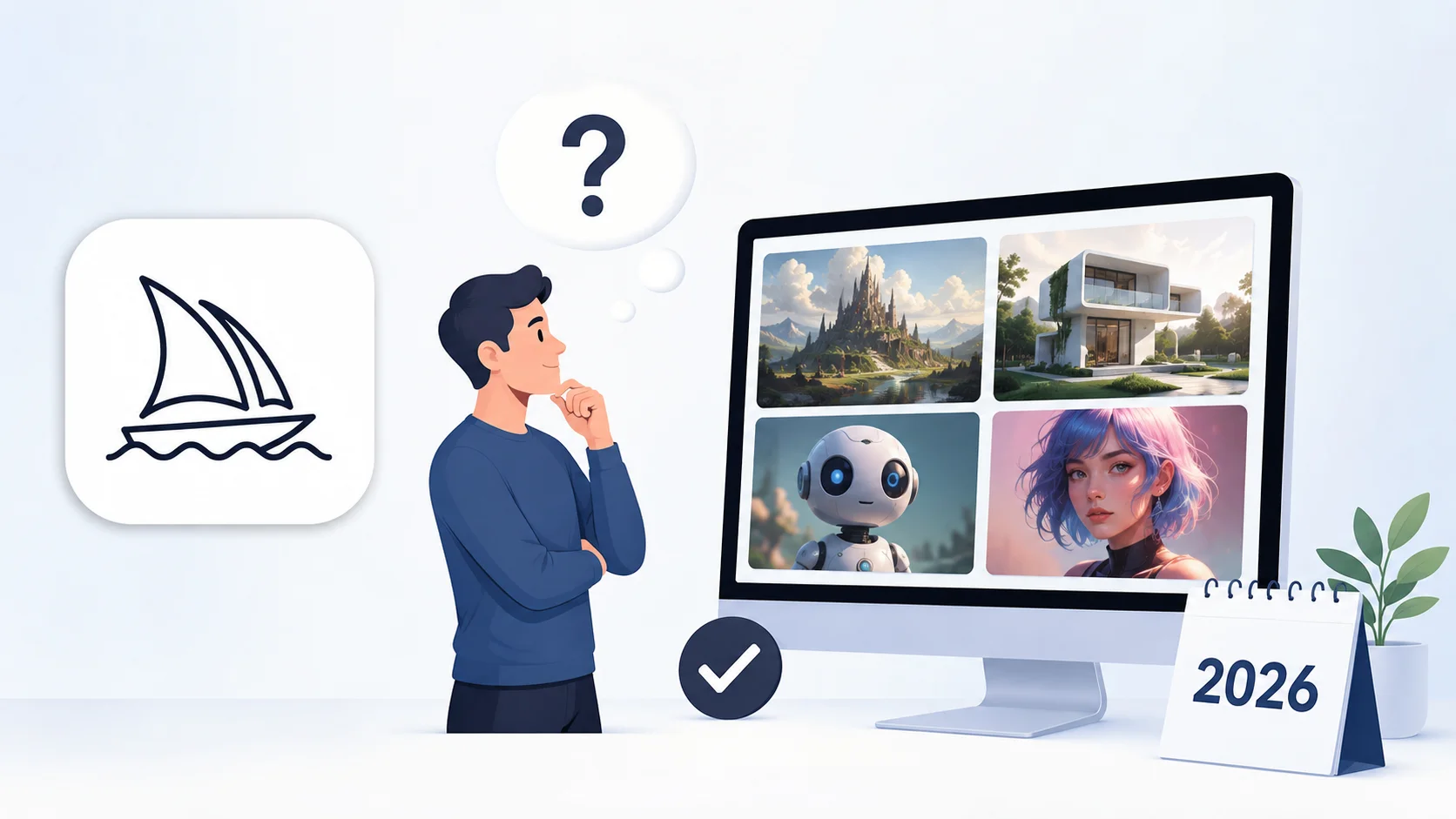
Midjourney has been one of the most talked about AI image generators since it launched. But the AI art space looks completely different now compared to even a year ago. With new competitors popping up every month, the question is whether paying for Midjourney still makes sense in 2026.
The short answer is that it depends on what you need. Midjourney is still one of the strongest options for certain types of image generation, but it is no longer the only game in town. Here is a breakdown of what you get, what you don’t, and whether the price tag is justified.
What Midjourney Offers in 2026
Midjourney has evolved significantly from its early Discord-only days. The platform now has a dedicated web interface, faster generation speeds, and improved image quality across the board. The latest model produces images that are consistently detailed, stylistically coherent, and surprisingly close to what professional illustrators create.
The core strength has always been aesthetics. Midjourney images have a distinct look that leans toward artistic, polished, and visually striking. If you are creating content where visual quality matters more than photorealism, Midjourney still leads the pack.
The platform also handles complex prompts well. You can describe intricate scenes with multiple elements, specific lighting conditions, and particular art styles, and the results are usually close to what you had in mind. This level of prompt understanding puts it ahead of many image generation alternatives.
Midjourney Pricing Plans in 2026
Pricing is often the deciding factor for most users. Here is what each Midjourney plan costs and what it includes.
| Plan | Monthly Price | Fast GPU Hours | Key Features |
|---|---|---|---|
| Basic | $10/month | 3.3 hours | Limited generations, personal use |
| Standard | $30/month | 15 hours | Unlimited relaxed mode, general use |
| Pro | $60/month | 30 hours | Stealth mode, faster processing |
| Mega | $120/month | 60 hours | Maximum speed, high-volume users |
For casual users who generate a handful of images per week, the Basic plan is enough. Content creators and designers who rely on AI images daily will likely need the Standard or Pro plan. The Mega plan is overkill for most individual users but makes sense for agencies and teams.
How Midjourney Compares to Free Alternatives
The biggest argument against paying for Midjourney is that free options have gotten remarkably good. Tools like DALL-E through ChatGPT, Stable Diffusion running locally, and various open-source models now produce quality that would have been unthinkable two years ago.
Here is how Midjourney stacks up against the popular alternatives.
| Feature | Midjourney | DALL-E (ChatGPT) | Stable Diffusion (Local) |
|---|---|---|---|
| Image quality | Excellent | Very good | Good to excellent (model dependent) |
| Ease of use | Simple prompts | Conversational | Requires setup |
| Cost | $10-120/month | Free or $20/month | Free (hardware costs) |
| Style consistency | Very consistent | Moderate | Highly customizable |
| Commercial license | Yes (paid plans) | Yes | Yes (most models) |
Midjourney wins on style consistency and overall polish. But if you already pay for ChatGPT Plus, you get DALL-E image generation included, which might be good enough for most use cases.
Who Should Pay for Midjourney
Midjourney is worth the investment for specific types of users. Not everyone needs what it offers, but for the right use case, nothing else comes close.
- Graphic designers who need high-quality concept art, mood boards, or visual references for client projects.
- Content creators who publish blog posts, social media content, or newsletters that need creative visuals on a regular basis.
- Marketing teams that need consistent brand imagery across campaigns and want reliable output quality every time.
- Game developers and indie studios looking for concept art, character designs, or environment references.
- Authors and publishers who want custom book covers or interior illustrations without hiring an artist for every project.
If you fall into any of these categories, the $30 per month Standard plan pays for itself quickly compared to hiring freelance designers or buying stock photos.
Who Should Skip Midjourney
Not everyone needs a dedicated AI image tool. There are situations where paying for Midjourney does not make financial sense.
If you only need a few images per month for personal projects, the free tier of other tools will cover you. If you need photorealistic product shots or images with specific text, Midjourney still struggles with those, and other AI tools handle them better.
If your workflow already includes ChatGPT Plus, the built-in image generation is a solid alternative. You can describe what you want in plain conversation, and the results are often good enough for blog posts, presentations, and social media content.
Midjourney Image Quality vs the Competition
The quality debate is where things get interesting. Midjourney has historically produced the most aesthetically pleasing images among all AI generators. That is still true in 2026, but the gap has narrowed considerably.
Where Midjourney excels is in artistic interpretation. Give it a vague prompt like “solitude in a winter forest” and it will produce something genuinely beautiful. The composition, color palette, and mood are handled with a level of sophistication that other tools often miss.
Midjourney does not just generate images. It makes creative decisions about composition and style that feel intentional rather than random.
However, for technical accuracy and photorealism, competitors have caught up. If you need images that look like actual photographs, tools focused on photo editing and realistic generation might serve you better.
The Commercial Use Question
One area where Midjourney is straightforward is commercial licensing. All paid plans include the right to use generated images commercially. You can use them in blog posts, marketing materials, product packaging, and even sell prints.
This is important for business users who need legal clarity. Some free tools have vague or restrictive licensing terms that could create problems if your content goes viral or gets challenged. With Midjourney, the commercial rights are clearly spelled out in the terms of service.
The only exception is the free trial. Images generated during the trial period are not licensed for commercial use. Once you switch to a paid plan, everything you generate is covered.
Midjourney Features That Justify the Cost
Beyond basic image generation, Midjourney offers several features that add value for serious users.
- Vary and remix options that let you refine specific parts of an image without regenerating the whole thing.
- Style references that allow you to upload an image and match its visual style in new generations.
- Pan and zoom capabilities for extending images beyond their original boundaries.
- High-resolution upscaling that produces print-ready images at large sizes.
- Consistent character generation for maintaining the same character across multiple images, which is useful for storytelling and branding.
These features matter when you are working on projects that require iteration and refinement. Quick one-off generations can happen anywhere, but polishing an image to match your exact vision is where Midjourney earns its subscription fee.
The Learning Curve in 2026
Midjourney used to require learning Discord commands, which turned off many potential users. The web interface has solved most of that friction. You can now generate images through a clean browser-based editor that feels similar to any other design tool.
Prompt crafting still matters though. The difference between a mediocre result and a stunning one often comes down to how well you describe what you want. Learning to write effective prompts is a skill that takes time, but the community has built extensive guides and prompt libraries that help new users get up to speed quickly.
The best Midjourney users are not the ones who write the longest prompts. They are the ones who know which words trigger the exact style and mood they want.
Is Midjourney Worth It for Content Creators
For bloggers, YouTubers, and social media managers, the answer usually comes down to volume. If you publish content daily and need unique visuals for each post, $30 per month for unlimited relaxed-mode generations is a steal compared to stock photo subscriptions that charge per download.
The images also perform well on social platforms. Midjourney outputs tend to stop scrollers because they look polished and eye-catching. For anyone building a personal brand or running content marketing campaigns, that visual edge can translate directly into engagement.
If you pair Midjourney with other content creation tools, you can build a complete content pipeline where writing, visuals, and distribution are all handled efficiently.
What Midjourney Still Gets Wrong
No tool is perfect, and Midjourney has clear weaknesses that are worth knowing before you subscribe.
- Text rendering in images is still unreliable. Letters often appear distorted or misspelled.
- Hands and fingers have improved but still occasionally produce odd results in complex poses.
- Specific brand logos or real product recreations are not possible due to content policies.
- The platform does not offer an API for automation, which limits integration with other workflows.
If any of these limitations are deal-breakers for your use case, you should explore alternatives before committing to a subscription.
Conclusion
Midjourney is still worth it in 2026 for users who prioritize visual quality, style consistency, and creative output. The $30 Standard plan offers the best value for most creators and professionals. However, if you only need occasional images and already have access to free alternatives through ChatGPT or Stable Diffusion, you can skip it without missing much. The gap between Midjourney and the competition has shrunk, but for pure artistic quality and ease of use, it remains the standard that other AI image generators are measured against.