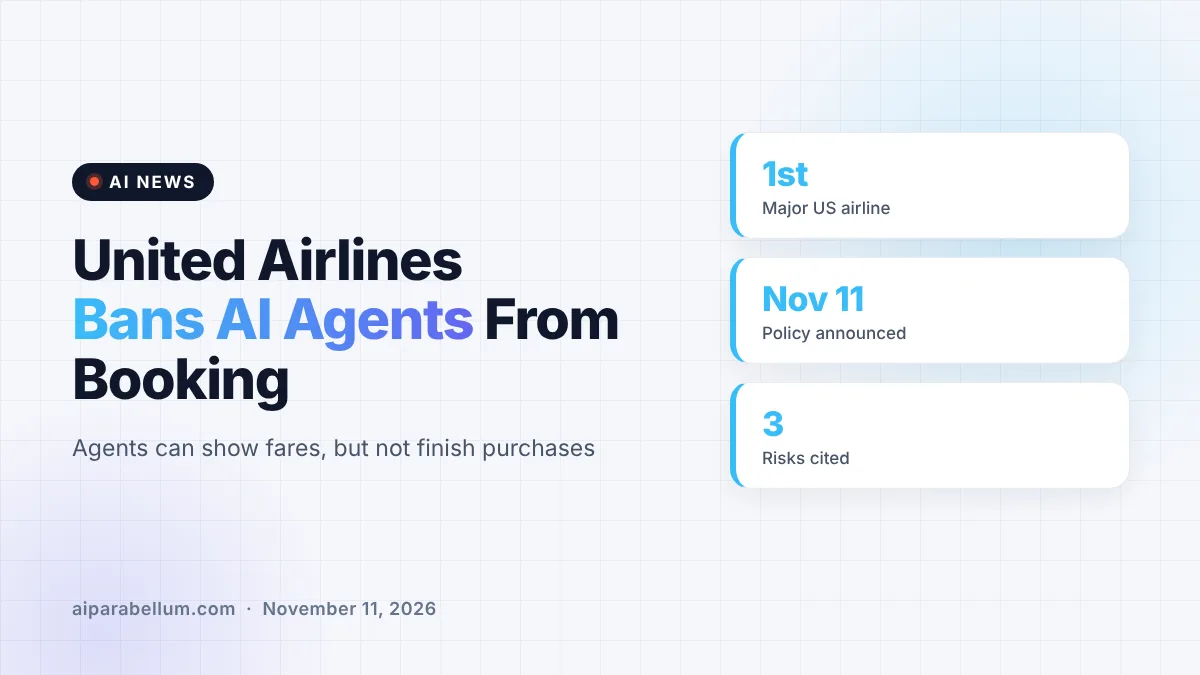
United Airlines is shutting the door on personal AI agents that try to book flights for you. On Wednesday, November 11, the carrier said it will restrict unauthorized third-party AI agents and assistants across its own website and app, and also through travel agencies and booking sites. It is the first major US airline to say so out loud, and it lands just as AI shopping assistants are going mainstream.
What United Airlines Announced About AI Agents
United says it is updating its booking, ticketing and distribution policies to block personal AI assistants that act on a customer’s behalf without the airline’s permission. The rule covers direct use of united.com and the United app. It also covers indirect routes, so a travel agency or aggregator cannot quietly plug an unauthorized agent into United’s systems either.
The change does not stop AI tools from helping you research a trip. Agents can still surface United flights and fares, but they are not allowed to finish the purchase on the airline’s site. United also said it will refresh its Digital Trust Center so travelers can see what the restrictions mean, how to protect their accounts and where to get help if an agent does something unexpected.
The reasons United gave
The airline pointed to three main risks in its statement:
- Account safety: sharing login details with a third-party assistant can expose sensitive personal information.
- Unintended actions: an agent might make purchases, change bookings or spend MileagePlus miles the traveler did not intend.
- Federal rules: automated actions could break Federal Aviation Administration and Department of Transportation requirements, such as the human acknowledgment at check-in that bags hold no banned items like explosives.
United said it will keep reviewing how personal AI assistants interact with its services as the tools change. It also urged other companies to weigh similar steps to protect customer data.
Why Airlines Are Wary of AI Booking Agents
Security is the official reason, but control of the customer matters too. United CEO Scott Kirby put it bluntly at an event in Chicago the day before: “I don’t want to create another middleman.” Airlines already share their customers with search engines, fare comparison sites and online travel agencies.
Aviation analyst Henry Harteveldt of Atmosphere Research Group told CBS News that flight searches cost airlines money. A wave of bot-driven searches could add expense without adding many sales. United reportedly sees little booking activity from AI agents so far, and its systems can already tell whether a reservation came from a person, a regular travel agency or an automated assistant.
The timing also matters. Personal agents are spreading fast, with Meta’s Muse passing 10 million users in October. Other businesses have started drawing their own lines, as seen when websites started to block AI agents they did not approve, and some banks limited agent access in October.
How Airlines Compare on AI Agents
Not every carrier is taking the same approach. Here is how the policies stack up based on what each airline has said publicly.
| Airline | Approach to AI agents | What agents can do |
|---|---|---|
| United Airlines | Restricts unauthorized personal AI agents | Show flights and fares, but not complete bookings |
| Delta Air Lines | Allows authenticated AI assistants | Complete bookings, with extra safeguards for sensitive trips |
| Southwest Airlines | Offers a ChatGPT plug-in | Browse available seats and find trips inside ChatGPT |
The split shows an industry still deciding whether AI agents are a new sales channel or a new risk. Travel companies are betting the other way, with projects like the Vayo travel agent built to handle trips end to end.
What This Means for You
If you have been testing an AI assistant for travel, you can keep using it for ideas, but plan on finishing United bookings yourself. Here are a few practical steps:
- Use AI for research only: let it compare dates, routes and prices, then book directly on United’s site or app.
- Keep your login private: do not hand your MileagePlus credentials to a third-party assistant.
- Double-check recent trips: if an agent booked anything for you lately, confirm it was ticketed correctly.
- Watch for policy updates: United says its Digital Trust Center will explain the rules and where to get help.
Fare search sites such as Kayak, Hopper and Google Flights will still show United fares, according to Harteveldt, so finding a deal should not get harder. If you want to tighten your online habits more broadly, a personal security assistant can help you spot risky account sharing.
The Bigger Fight Over AI Shopping Agents
United’s move fits a wider pattern of companies setting terms for how AI agents may act on their platforms. Payment networks are building their own rules, like the Amex purchase framework, while carmakers such as Rivian have chosen to open the door to third-party AI agents. Retail and banking companies have also limited agent access in recent months.
For AI developers, the message is clear: agents that log in as the user and click through checkout pages may keep running into walls. Approved, authenticated integrations look like the path most big brands want. You can follow more developments like this on our AI news page.
Sources
Reporting from Quartz, CBS News, Skift and USA Today.
Conclusion
United Airlines has become the first big US carrier to block personal AI agents from booking flights, citing account safety, surprise purchases and federal check-in rules. AI tools can still help you plan a trip and compare fares, but the final click on a United ticket now has to come from you or an approved partner. With Delta taking a more open approach, travelers and AI companies will be watching which model the rest of the industry follows.