If you ask an AI assistant where to buy your favorite brand, it might point you to a store that is not real. A new study found that AI chatbots surfaced fake websites and other risky shopping links in up to 15 percent of answers, with ChatGPT, Gemini and Perplexity all making the mistake. The findings land just as holiday shopping season starts and more people lean on AI to find deals.
What the Study on AI Chatbots and Fake Websites Found
The research comes from Podqi, a company that helps brands fight counterfeits and protect their intellectual property. Podqi asked the three chatbots shopping questions about 151 brands, from big names like Lululemon, Birkenstock and Le Creuset to smaller labels like Stüssy and Madhappy, which is a Podqi client. The test ran in two rounds during September and produced 6,795 answers in total.
Podqi counted a site as risky if it fell into one of these groups:
- Fake stores that pretend to be a real retailer or brand
- Sites that sell knockoff products
- Old brand domains that someone else has since registered
- Dead sites that are offline but could be bought and reused by scammers
The questions were simple ones a real shopper might ask, such as where to buy a brand online or whether it ships internationally. Podqi wrote its own prompts rather than using real customer chats, then tracked the answers with a tool that monitors AI responses.
How ChatGPT, Gemini and Perplexity Compared
All three assistants showed risky links at some point, but the rates were very different. A “mention” in the study covers any time a chatbot recommended a risky site, displayed it without comment, or warned the user about it.
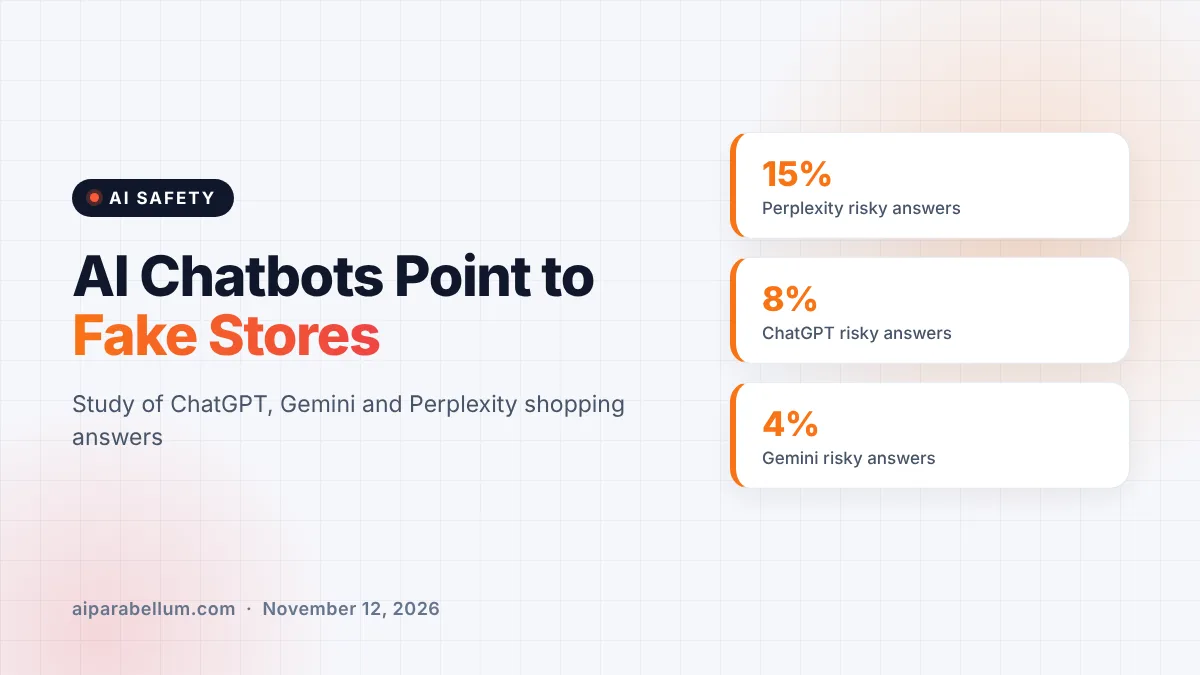
| Chatbot | Answers with risky sites | Notable detail |
|---|---|---|
| Perplexity | 15% | Worst result; once named a wrong page as a brand’s official store |
| ChatGPT | 8% | Warned users about risky sites 24% of the time, the best of the three |
| Gemini | 4% | Lowest rate of risky sites shown |
In one example, Perplexity pointed to the wrong page as Stüssy’s official website and called it the best place to get authentic items. That is exactly the kind of confident answer that can lead a shopper straight into a scam.
Smaller Brands and Regional Sites Are Most at Risk
Smaller brands came out worse than large ones. Questions about bigger companies turned up risky sites only about half as often.
Questions about regional or country-specific stores were another weak spot. The chatbots sometimes listed fake regional sites for brands that do not even have them.
How the AI Companies Responded
Google said it was glad Gemini performed best among the products tested. The company added that it is open about Gemini making mistakes and shows source links so people can check answers themselves.
OpenAI said its goal is for ChatGPT to connect people with reliable places to shop. It said it keeps improving safeguards to make deceptive sites less likely to appear and thanked researchers for sharing examples.
Perplexity pushed back, saying it has led credible accuracy benchmarks for years. It said it never claims to be 100 percent accurate but is focused on getting answers right.
Why Fake Websites in AI Answers Matter Now
AI companies are actively pitching their assistants as shopping helpers. Tools like Perplexity’s answer engine and ChatGPT now research products, compare prices and suggest where to buy. That makes a bad link far more costly than a wrong trivia answer.
The timing raises the stakes. Holiday shoppers often hunt for in-stock items and lower prices at stores they have never used before, which is exactly when a fake site can slip through. Scammers already use AI in many other ways, as our AI news coverage shows and as we explain in our AI scam prevention guide.
A chatbot’s answer is a starting point, not a seal of approval. The more confident it sounds about a store you have never heard of, the more carefully you should check.
What This Means for You
You do not need to stop using AI for shopping research, but you should treat its store links with care. Podqi’s CEO Trevor West advised shoppers to always verify a site before entering personal or card details.
- Go to the brand’s official site by typing its address yourself or using a link you already trust.
- Be extra careful with small brands and regional store links, the areas where the study found the most problems.
- Look for warning signs such as prices that seem too low, odd domain spellings or no clear contact details.
- Pay with a credit card or a service that offers buyer protection, not a bank transfer.
- Check that the assistant shows its sources, and compare tools; our source citation comparison explains how they differ.
If you shop with Google’s tools, features like Gemini scam detection can add another layer of protection. Even so, no chatbot replaces a quick check of the web address before you pay.
Sources
This article is based on reporting from The Verge, which received the Podqi study exclusively and gathered responses from Google, OpenAI and Perplexity.
Conclusion
AI chatbots can be handy shopping assistants, but this study shows they still send people to fake websites, knockoff sellers and dead domains far too often. Gemini did best, ChatGPT was in the middle and Perplexity showed risky links in about one of every seven answers. Smaller brands and regional stores were the biggest trouble spots. Until these tools get better at spotting impostors, the safest habit is simple: verify the store yourself before you hand over any payment details.