Google is changing how links show up in AI Mode and AI Overviews, moving inline links higher in answers and making source links easier to click. The update arrives alongside news that more than 400 publishers, including several big national news brands, have joined its paid News AI pilot. For anyone who uses Google’s AI search, it means more visible paths back to the original websites.
What Changes for Google AI Mode Links
Google says inline links will now appear higher up in AI responses and show up more often. The company describes this as part of ongoing increases to the number of links inside its AI search features.
The goal is simple. When you read an AI answer, the key sources should be clickable right where you need them, instead of buried at the bottom.
Here is the full list of changes Google announced:
- Inline links placed higher in AI Mode and AI Overviews answers, and more frequently
- A redesigned “Dive Deeper” section at the end of answers, with image thumbnails and bigger click targets
- Carousels for timely news articles expanding to more countries and languages
- Preferred Sources, which lets you pick outlets you trust, also reaching more places
- A test of a new top section for official sites when you need to finish a specific task
- A test of clickable creator and publisher names on video results
A Shortcut to the Official Website
The most useful test may be the new section at the top of some answers. For tasks where only one or two official sites can actually help, like asking for an airline refund, Google will try placing those links first.
It also plans to add a short note explaining why each link is useful. That could save you from reading a long AI summary when what you really need is the airline’s own refund form.
Preferred Sources Is Catching On
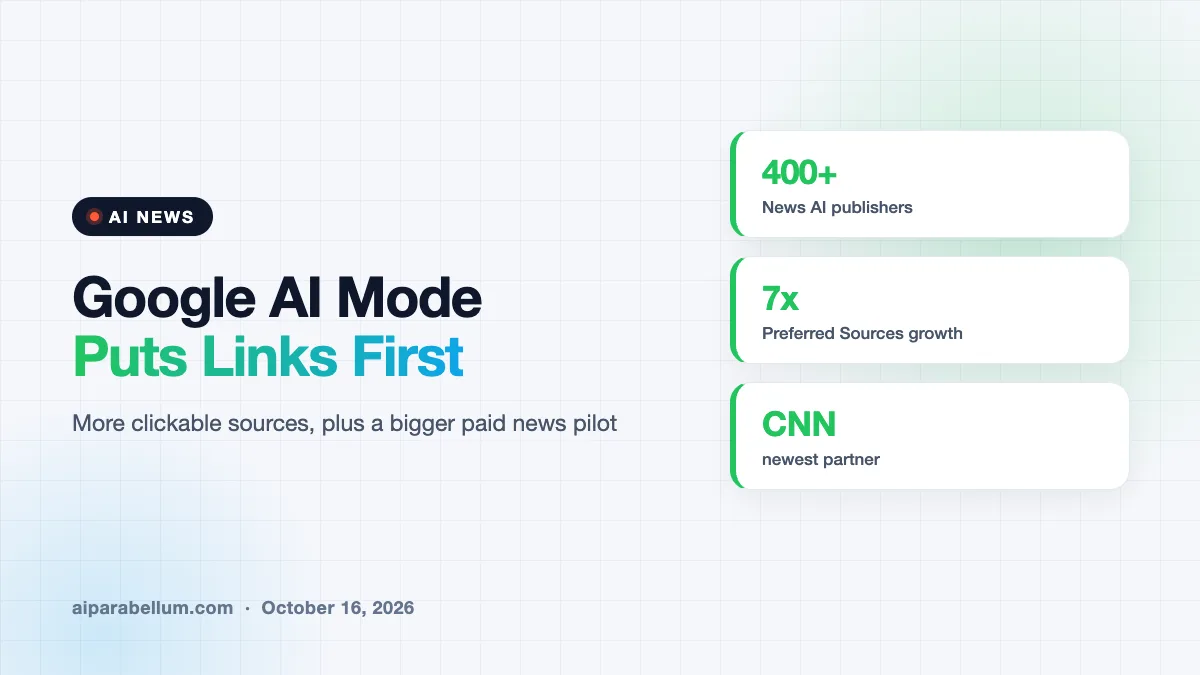
Preferred Sources launched earlier this year and lets you tell Google which publishers you want to see more often. Google says use of the feature has grown sevenfold since launch, which is why it is now expanding to more regions and languages.
Google AI Mode and the Publisher Traffic Debate
These changes don’t come out of nowhere. Since AI Overviews and AI Mode started answering questions directly, many publishers have worried that fewer people click through to their websites.
Making links bigger and more frequent is Google’s answer to that concern. Whether it actually sends more visitors to news sites and blogs is something publishers will be watching closely in their own traffic numbers.
| Feature | Status | What you will notice |
|---|---|---|
| Higher inline links | Rolling out | Source links appear earlier in AI answers |
| Dive Deeper redesign | Rolling out | Thumbnails and easier-to-click links at the end |
| Timely article carousels | Expanding | News carousels in more countries and languages |
| Official sites section | Testing | Task links shown first, with context |
| Clickable creator names | Testing | Video results link to Search profiles |
Google’s Paid News AI Pilot Passes 400 Publishers
Google also shared that more than 400 publishers are now part of its News AI pilot, which it first announced in December. The program pays publishers for supplying enhanced content that Google uses to build new AI features, such as in-depth article overviews on Google News publisher pages.
Google named Axios, CNN, and the Financial Times among the newest partners. One of them, a major US cable news network, described its agreement as a multi-year strategic partnership that gives Google enhanced content rights for experimental features in its products.
The network said the deal means it will be paid for the delivery and use of its content in AI products. It added that the agreement fits a wider strategy of protecting its intellectual property while working with AI companies it considers responsible.
Why Licensing Deals Matter
Licensing deals like these are becoming the main way big AI companies and news outlets settle their differences. Instead of fighting over whether AI can use news articles freely, they agree on payment and access.
For readers, it may mean AI summaries built from licensed, up-to-date reporting rather than whatever the system can scrape. It also gives those outlets a reason to keep feeding fresh content into Google’s AI tools.
What This Means for You
If you use Google’s AI search every day, you should start seeing more clickable sources inside answers. That makes it easier to check where a claim came from before you trust it.
- Click the inline links when an answer matters, like health, money, or travel questions.
- Set up Preferred Sources so outlets you trust appear more often.
- Watch for the new official-site section when you need to complete a task.
- If you run a website, track referral traffic from AI Mode over the next few months.
If you are curious how other tools handle this, our comparison of AI source citations is a good starting point. Google has been busy lately, from Universal Cart shopping to its new Deep Review checker. You can also browse more AI search engines or catch up on our latest AI news.
Sources
This article draws on reporting from The Verge and 9to5Google on Google’s search update, plus the partnership announcement from the CNN Press Room.
Conclusion
Google is moving links higher and making them easier to click in AI Mode and AI Overviews, while testing new ways to point you straight to official sites. At the same time, its paid News AI pilot has grown past 400 publishers, with major national news brands among the latest to sign on. Together, the moves show Google trying to ease publisher worries about lost traffic without giving up AI-first answers. Whether more clicks actually reach websites will become clear only with time. For now, you get more visible sources and more control over which outlets you see.