When a startup shuts down, its leftover emails, chat logs, and code used to be worth almost nothing. Now AI labs are buying that material as AI training data, creating a new market for the digital remains of failed companies. The trend could help founders recover some cash, but it also raises tough questions about privacy and who gets paid.
Here is how the market works, who is buying, and why lawyers are worried.
Why AI Labs Want Startup Training Data
Demand for this kind of data took off last year. AI labs had started hitting the limits of what public web data and synthetic data could teach their models.
Real workplace archives show how people actually work together. They capture arguments, tricky judgment calls, and messy problem solving that are hard to fake in a simulated setting.
One buyer, Surge AI, uses this data to build “reinforcement-learning gyms.” These are practice environments where AI agents learn tasks such as debugging complex IT systems or drafting legal briefs.
Not All Data Is Equal
Nick Heiner, who leads Surge AI’s work on these environments, says variety and depth matter most. A single company’s Slack history can be worth more than another firm’s Slack, email, and calendars combined if its conversations are richer.
Real archives also avoid common mistakes found in synthetic data, like references to dates that do not exist. Even so, no company has published tests showing how much better models get when trained on real data instead of the alternatives.
Who Is Selling the Data
A new set of “tech undertakers” has grown up around dying startups. Data from Carta and AngelList shows startup shutdowns rising between 26% and 56% a year recently, so there is plenty of supply.
SimpleClosure, which helps founders wind down their companies, added data sales in April through a platform called Asset Hub. Rival firm Sunset runs a fast-growing data resale business as well.
| Example | Details |
|---|---|
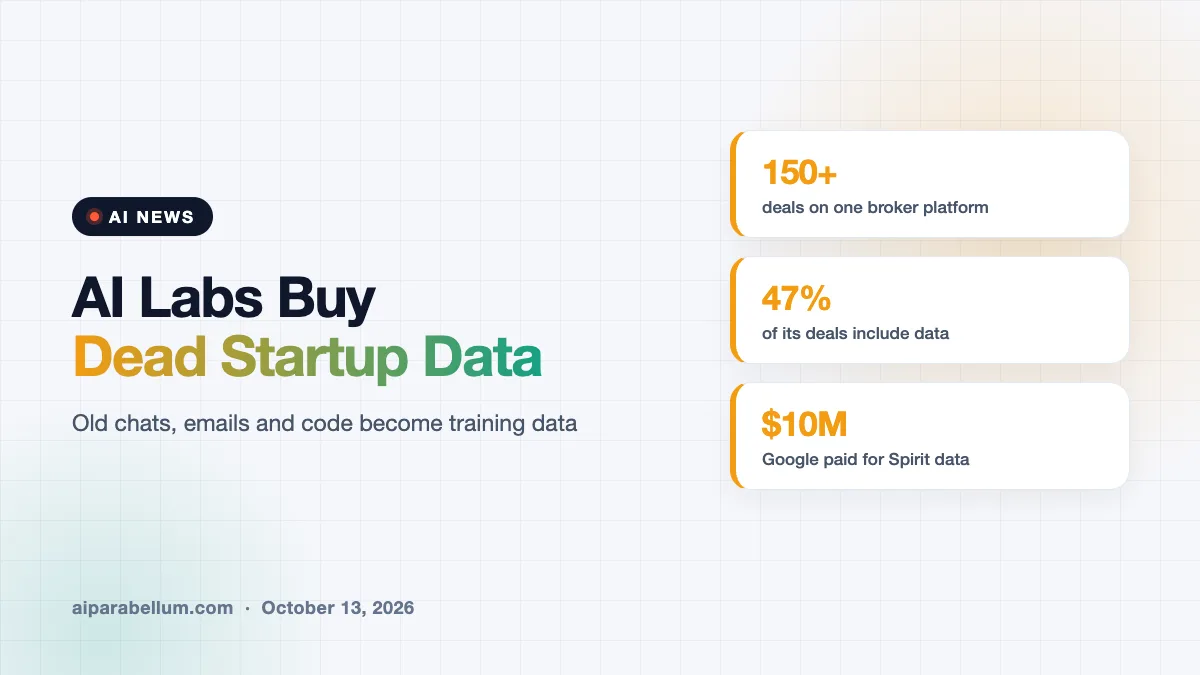
| SimpleClosure Asset Hub | 150+ deals; expects to return $10M+ to startups by end of 2026 |
| SimpleClosure deal mix | 47% of deals now include code or data sales |
| Small crypto startup | About $25,000 for code, plus roughly $15,000 pending for workspace data |
| Spirit Airlines archive | Bought by Google for $10 million in August |
How Sellers Set a Price
Sunset CEO Brendan Mahony says his firm values a client’s data based on a few factors:
- How many people worked at the company
- How many years it operated
- How much data it collected
- How the team used its workplace tools
Buyers still quote very different prices. That is because each one bases its offer on its own guess about how many useful training tasks a dataset can produce.
The Biggest AI Training Data Deals So Far
The largest known deal came from an airline, not a startup. In August, as part of Spirit Airlines’ bankruptcy, Google outbid AI data company Mercor for the carrier’s decades of records.
That archive included 100 million emails, 500 million Teams messages, and 176,000 employee records, all for $10 million. Separately, Bloomberg reported in September that SpaceX’s AI unit was weighing purchases of data from struggling startups.
On the small end, one founder who closed his crypto startup this year earned about $25,000 for his code. He expects roughly $15,000 more for workspace data from tools like Google, Notion, Figma, and Slack.
The Privacy Problem
These sales sit in a legal gray zone. Spirit’s flight attendants’ union objected to that deal on privacy grounds, and one attorney who advises AI startups has called this kind of data “legally radioactive.”
Sellers say they hire data scientists to strip out personal details and leave out HR records, and buyers say they clean the data too. But work emails and calendars can still hide private details, like doctor visits or school pickup plans.
Pay is another issue. Sale money usually goes to senior creditors and investors, not to the employees whose messages are being sold. Emory law professor Ifeoma Ajunwa argues employers should get clear consent first, though no federal law bans these sales today.
What This Means for You
If you work at a startup, your everyday messages could one day help train an AI model. It is worth thinking about what you put in work chats and email.
- Keep personal matters, like medical or family details, out of work tools when you can.
- Ask your employer how company data would be handled if the business shut down.
- If you are a founder, learn who is buying your data and what it will be used for before you sign.
- Read up on data anonymization methods so you know what good scrubbing looks like.
Founders should also know the limits of these deals. Sellers often have little insight into the buyer’s plans and little assurance that an offer is fair.
Every Slack thread and email chain now has a possible second life as AI training material, so treat work chat as something that may outlast the company.
Sources
This article draws on reporting from MIT Technology Review, which interviewed founders, data brokers, buyers, and legal experts. For more on building with AI, see our guides on AI datasets, AI agent tools, and the latest AI news.
Conclusion
AI labs are turning the leftover code, chats, and emails of failed startups into training material for their models and agents. Brokers like SimpleClosure and Sunset are helping founders sell these archives, while big buyers such as Google have paid millions for larger collections. Prices are still unsettled, and nobody has shown exactly how much this real-world data improves AI. Privacy concerns and the question of who gets paid remain unresolved. Expect more rules and licensing deals as this market grows.