Universal Music Group and Sony Music want a federal court to force DistroKid to share how many DistroKid AI songs reach streaming services each month. The two labels say the numbers are key evidence in their copyright fight with Suno, the AI music generator. DistroKid, the world’s largest independent music distributor, is not a party to that case, but it may end up at the center of it.
What the Labels Are Asking DistroKid For
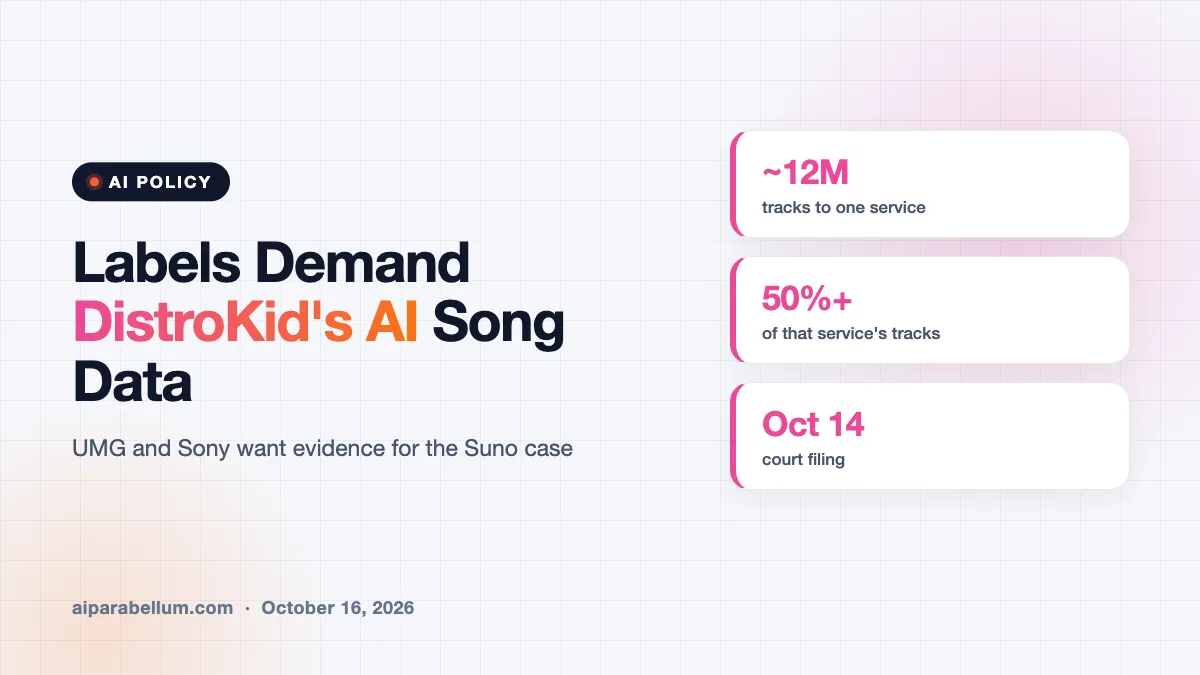
The new filing, made on Wednesday, October 14, in Manhattan federal court, asks a judge to make DistroKid comply with a subpoena the labels sent last month. That subpoena seeks DistroKid’s monthly submission data and the results of its AI detection tools. According to the labels, DistroKid has refused to produce a single document so far.
The labels describe DistroKid as one of the main channels through which AI-generated recordings are flooding streaming platforms. They argue that only DistroKid holds this data, because it sits upstream of the streaming services.
The Numbers in the Filing
The labels’ filing puts DistroKid’s reach in sharp terms. Here are the key claims:
| Claim in the filing | Figure |
|---|---|
| Tracks DistroKid sent to one major streaming service | Nearly 12 million |
| Time period | March to September 2026 |
| Share of all tracks delivered to that service | More than half |
| Compared with all other distributors | More than all of them combined |
These are the labels’ figures, and the filing does not name the streaming service. DistroKid has not publicly confirmed the numbers.
Why DistroKid AI Songs Matter in the Suno Case
UMG and Sony have been suing Suno for copyright infringement, claiming it trained on millions of real songs without permission. A big part of Suno’s defense is fair use, and that legal test looks at whether a new use harms the market for the original work. The labels say the volume of AI music hitting streaming services is exactly that kind of market harm.
Suno does not track where its songs go once users download them, the labels say. DistroKid, on the other hand, has said it measures AI use in the songs it distributes. That is why the labels call it a singular source of evidence.
A Two-Front Legal Fight
This is not DistroKid’s only legal headache with the labels. In September, UMG separately sued DistroKid, claiming it helped bad actors upload AI-generated “slop” at huge scale and dilute royalties for real artists. Sony is not part of that lawsuit.
DistroKid has denied wrongdoing in that case and said it disagrees strongly with UMG’s claims. Days before this new filing, it also said it had removed some user uploads in response to the UMG lawsuit.
What DistroKid Says
In a statement on October 16, a DistroKid spokesperson said the company is a third party in the litigation between the labels and Suno. The company said it is committed to transparency and will keep cooperating with the legal process. Suno did not immediately comment.
The fight adds to a growing push across the music business to track AI content. Streaming services have recently moved to label AI songs, and Deezer now offers a one-switch AI filter for listeners.
What This Means for You
If you make music, stream it, or use AI tools to create it, this case could shape what happens next. Here is what to keep in mind:
- Independent artists using DistroKid may see stricter checks on AI-assisted uploads as pressure builds.
- If you use an AI music generator, expect distributors to ask more questions about how tracks were made.
- Listeners could see more labels and filters for AI content on streaming apps.
- Any data DistroKid hands over could become a rare public measure of how much AI music is out there.
You can browse more tools in our AI music category.
Sources
This report draws on coverage from Billboard and The Hollywood Reporter. For more updates, visit our AI news section.
Conclusion
UMG and Sony are trying to turn DistroKid’s internal AI data into evidence against Suno. They say the distributor sent nearly 12 million tracks to one major service in six months, and its AI detection results could show how much of that flood is machine-made. DistroKid says it will cooperate but has not handed over documents yet, according to the labels. A judge will now decide whether it must. The outcome could give the industry its clearest look yet at how much AI music is reaching your playlists.