AMD has closed its acquisition of World Labs, the AI startup that builds models for creating and simulating 3D worlds. The AMD World Labs acquisition, first agreed in September as an all-stock deal valued at about $8.2 billion, also brings AI pioneer Fei-Fei Li into the chipmaker as executive vice president and chief scientist. She will report directly to AMD chair and CEO Lisa Su.
What AMD Announced About the World Labs Acquisition
AMD confirmed on Monday, November 16, that the deal is complete. The company says the move adds a leading model research team that will help shape its future hardware, software and systems for what it calls the open AI ecosystem.
World Labs develops AI models that generate and simulate interactive 3D environments. It also builds technology for robotic learning and simulation, an area that is getting a lot of attention as companies try to train robots in virtual worlds before they touch the real one.
Lisa Su framed the deal around a simple idea: chips and models should be designed together. In AMD’s announcement, she said powering the next era of AI “requires us to optimize compute platforms and models together.”
The deal at a glance
| Detail | What we know |
|---|---|
| Buyer | AMD |
| Company acquired | World Labs, an AI lab focused on 3D world models |
| Deal value | About $8.2 billion when agreed, paid in AMD stock |
| Agreement announced | September 28, 2026 |
| Completion announced | November 16, 2026 |
| Fei-Fei Li’s new role | Executive vice president and chief scientist, reporting to Lisa Su |
According to reporting that reviewed AMD’s filings, the transaction technically closed on November 13, and AMD issued roughly 15 million new shares to World Labs’ former stockholders. AMD’s own press release did not repeat the price, so the $8.2 billion figure reflects the value when the deal was first signed.
Why a Chipmaker Wants a World Model Lab
AMD mostly sells processors, GPUs and networking gear, so buying a model lab is a notable shift. The goal is to let researchers who build cutting-edge models work side by side with the engineers who design the chips those models run on.
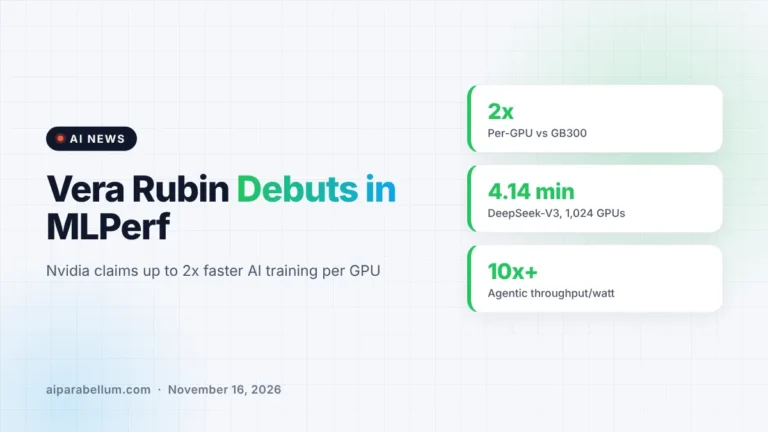
That matters because AI workloads change fast. If AMD can see where models are heading before they hit the market, it has a better shot at building hardware that fits them, which is how rival Nvidia Vera Rubin systems have kept their lead in AI training.
World Labs and AMD were not strangers. The two already had a technical partnership that started in 2025, centered on training and running models on AMD GPUs, and AMD was among the investors in World Labs’ funding round earlier this year.
What World Labs brings to the table
- Fei-Fei Li, one of the best-known names in AI research, now in a top AMD leadership role.
- A team that builds generative models for interactive 3D scenes, including its Atlas world model released in November.
- Tools for robot training models and simulation, a fast-growing use for world models.
- Products used for film sets, architecture mockups and game environments.
AMD says the World Labs team will keep doing foundational model research rather than being folded into chip work. The researchers will also collaborate with AMD engineers to turn insights about new model capabilities into future infrastructure.
How the World Labs Deal Fits AMD’s AI Strategy
This is one of several recent moves that bring AMD closer to the software and models running on its silicon. The chipmaker has been pushing its Instinct GPUs as an alternative for companies that do not want to depend on a single supplier.
Owning a respected research lab also helps with recruiting and credibility. Developers tend to follow tools and models, and a strong in-house team gives AMD a way to show its hardware working well on demanding new workloads like 3D AI computing.
The timing is interesting too. The chip industry has been unsettled by leadership turmoil at its biggest player, including Jensen Huang’s resignation as Nvidia CEO, and AMD is positioning itself as a steady, research-driven option.
What This Means for You
If you are not building AI systems, you will not notice changes overnight. Over time, though, this deal could affect the tools and hardware you use in a few ways.
- Developers may see better support for 3D and simulation models on AMD GPUs as the two teams work together.
- More competition with Nvidia could mean more choice and possibly better pricing for cloud AI compute.
- Creators using World Labs tools should watch for product updates, since AMD has not yet detailed long-term plans for them.
- Robotics teams may get stronger simulation options tied to AMD hardware.
For a wider look at AI products shaping the market, you can browse our latest AI news.
Sources
Primary source: AMD’s announcement of the completed World Labs acquisition. Additional reporting from Unite.AI and MLQ.ai.
Conclusion
AMD has turned its $8.2 billion bet on World Labs into reality, gaining a top world-model team and one of AI’s most respected researchers in Fei-Fei Li. The company’s plan is to let model research steer how it designs future chips, software and systems. It is a clear sign that AMD wants to compete with Nvidia not just on hardware specs but on a deeper understanding of where AI models are going. The real test will be whether this combined team can turn research into products developers actually choose.