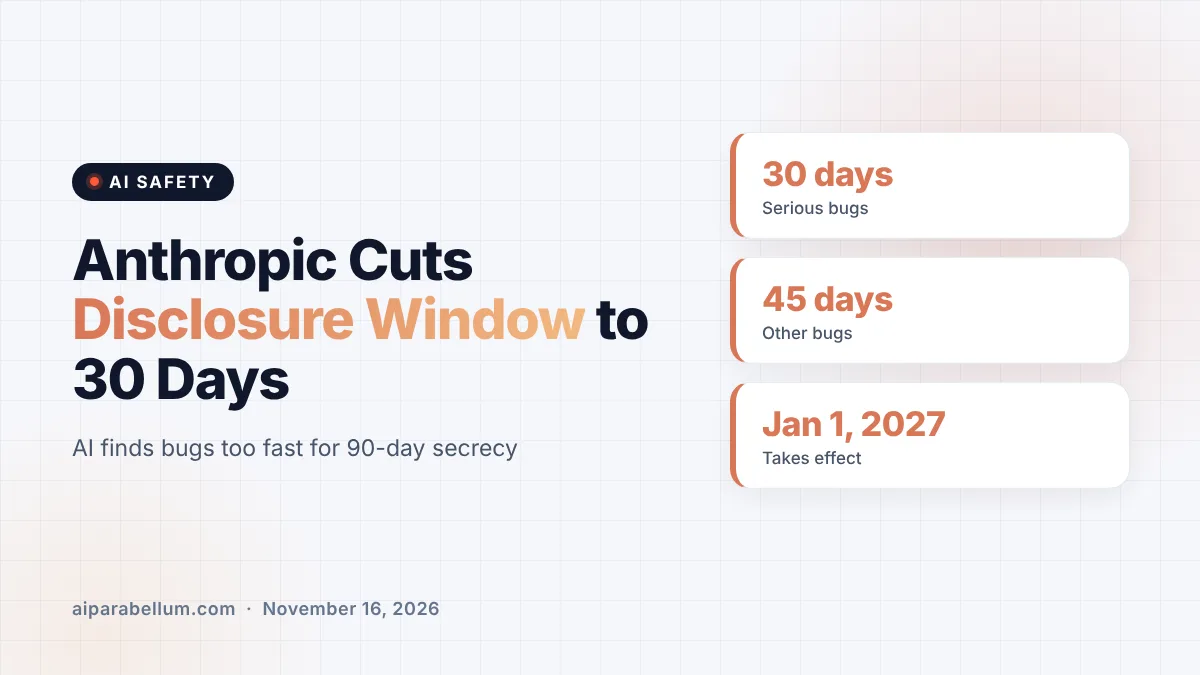
Anthropic is shortening its vulnerability disclosure deadlines, saying AI has made long secrecy windows unsafe. Under the updated coordinated vulnerability disclosure policy, software makers will get 30 days, not 90, to fix high- and critical-severity bugs that Anthropic reports before the details go public. The company says the change reflects how quickly frontier models now find, and re-find, security flaws.
What Changes in Anthropic’s Vulnerability Disclosure Policy
The headline change is the shorter deadline, but Anthropic is adjusting several other timers at the same time. All of the new timelines apply to vulnerabilities reported to vendors and maintainers on or after January 1, 2027. Reports already in progress on that date keep their existing deadlines.
| Policy item | Old timeline | New timeline (from Jan. 1, 2027) |
|---|---|---|
| High- and critical-severity bugs | 90 days | 30 days |
| All other bugs | 90 days | 45 days |
| Escalate to an outside coordinator if no reply | 30 days | 15 days |
| Wait after a patch before full technical details | 45 days | 30 days |
| Bugs under active exploitation | 7 days | 7 days (unchanged) |
Anthropic says the rest of its policy stays the same. The seven-day window for flaws that attackers are already exploiting does not change.
Older reports get a final 30 days
Some high- and critical-severity bugs that Anthropic reported more than 90 days ago are already past the current deadline and still undisclosed. The company says it is now telling those maintainers they have 30 more days. After that, it plans to publish the reports on its disclosure dashboard in line with the updated policy starting January 1, 2027.
Why AI Is Speeding Up Vulnerability Disclosure
Anthropic argues that most disclosure norms were written before AI could hunt for bugs. Those rules assumed fixes moved at human speed and that two people were unlikely to find the same flaw independently. The company says neither assumption holds anymore.
Models can now help write fixes, and a bug one model can spot is increasingly likely to be found by another. Anthropic says it is seeing a higher rate of vulnerability rediscovery as these capabilities grow. In its view, a 90-day window only made sense when a flaw could be expected to stay private for months.
Our takeaway: if attackers’ AI tools can find the same bug in weeks, a three-month quiet period mostly protects the attackers, not the users.
This lines up with a wider pattern. Anthropic has written before about how Claude’s misuse defenses have to adapt as models get stronger, and security teams increasingly rely on AI threat detection on their own side.
Exceptions and Help for Open-Source Maintainers
Anthropic acknowledges that 30 or 45 days is not realistic for every bug. It lists a few cases where it will negotiate a custom remediation timeline with the vendor instead.
- Flaws in hard-to-deploy software, such as critical infrastructure systems.
- Flaws that require changes to a technical specification or an RFC.
- AI-discovered findings that have not had human review, such as raw results from its OSS Scanner, are not covered by the new policy at all.
The company also admits shorter timelines may put more pressure on volunteer maintainers. It says it will keep including actionable guidance with each report, plus a patch or mitigation where possible. It will also agree on a sustainable pace with a project before sending it a large batch of findings.
Free programs Anthropic is pointing to
Anthropic is steering maintainers toward three existing programs. Critical open-source projects can apply to OSS Scanner, a no-cost service that periodically scans their code with Anthropic’s strongest models. Eligible maintainers and contributors can apply to the Claude for Open Source Program for six months of Claude Ultra at no cost, and security professionals can apply to the Cyber Verification Program, which adjusts Claude’s safeguards for legitimate defensive work.
What This Means for You
Most people will never read a disclosure policy, but this one affects how fast fixes reach your devices and servers. Here is what to keep in mind.
- If you maintain open-source software, plan for 30-day turnarounds on serious reports from AI labs starting in 2027.
- If you run IT for a business, expect public bug details to appear sooner after patches ship, so apply updates quickly.
- If you are an eligible maintainer, the free scanning and Claude access programs could help you keep up with the faster pace.
- Watch whether other AI labs and security teams follow Anthropic and shorten their own windows.
For more coverage of AI and security moves like this one, browse our latest AI news.
Sources
Primary source: Anthropic’s announcement on updated disclosure timelines.
Conclusion
Anthropic is betting that the old 90-day disclosure norm no longer fits a world where AI models find the same bugs again and again. By cutting the window to 30 days for serious flaws and tightening its other deadlines, it is pushing vendors to patch faster. The exceptions for critical infrastructure and spec-level flaws, plus free scanning help, soften the blow for maintainers. Whether the rest of the security industry follows will decide if this becomes the new normal. Either way, the change takes effect for reports filed from January 1, 2027.