Apple just posted a record September quarter, but it also gave investors a rare look at what Siri AI costs the company. On its November 2 earnings call, Apple said rising memory prices and the rollout of its new Siri AI will push profit margins lower over the holiday quarter. Here is what changed, why AI is now showing up on Apple’s income statement, and what it could mean for the price of your next device.
Record Revenue, Thinner Margins
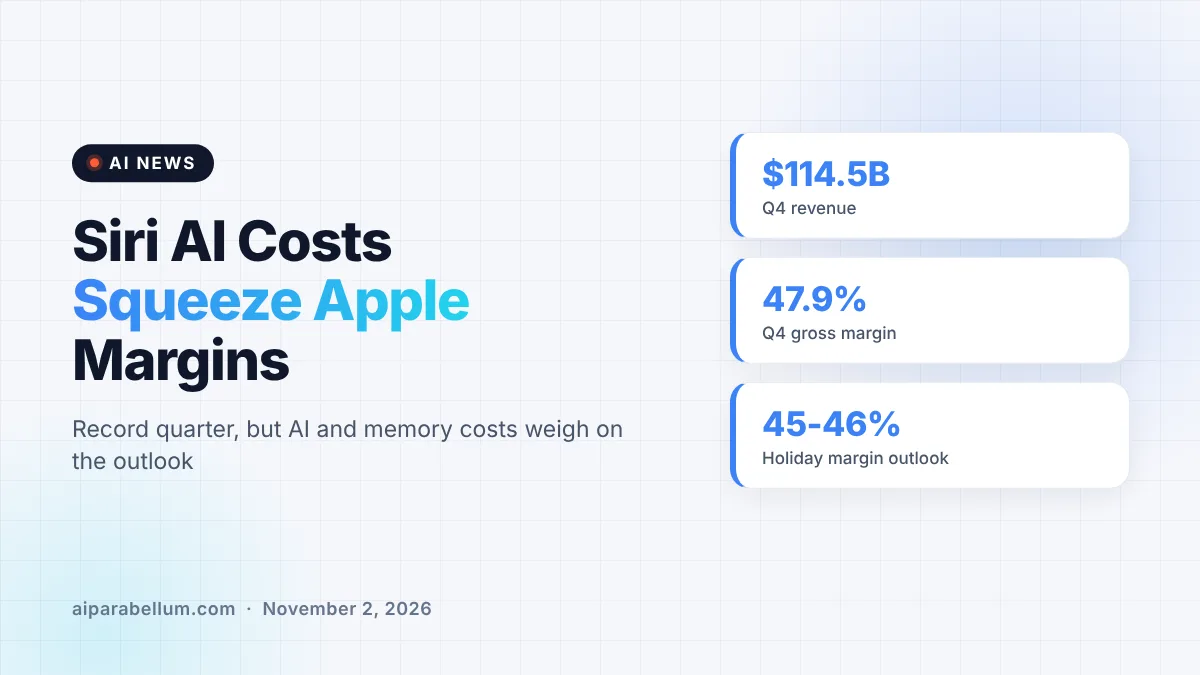
Apple reported revenue of $114.5 billion for its fiscal fourth quarter, which ended September 26. That is up 12 percent from a year earlier and a record for the September quarter. Diluted earnings per share came in at $2.10, up 14 percent.
The full fiscal year closed at $479 billion in revenue, Apple’s best year ever. The company generated $28 billion in operating cash flow during the quarter and returned the same amount to shareholders. It also declared a dividend of $0.27 per share.
The weak spot was gross margin. Company-wide margin fell to 47.9 percent, and that figure still included about one percentage point of help from tariff refunds.
| Metric | Fiscal Q4 2026 | Comparison |
|---|---|---|
| Revenue | $114.5 billion | Up 12% year over year |
| Diluted EPS | $2.10 | Up 14% year over year |
| Company gross margin | 47.9% | 50.1% in the June quarter |
| Product gross margin | 37.2% | 40.1% in the June quarter |
| Holiday quarter margin outlook | 45% to 46% | Guidance for fiscal Q1 2027 |
How Siri AI Costs Hit Apple’s Bottom Line
CFO Kevan Parekh said the expected drop in holiday-quarter margins comes mainly from higher memory costs. The second factor is the ongoing launch of Siri AI, the rebuilt assistant that CEO John Ternus called part of Apple’s “most ambitious lineup yet.”
When analysts pushed for detail, Parekh described two separate ways the assistant weighs on margins:
- Cloud spending: running Siri AI requests on Apple’s servers adds real computing costs every time people use it.
- Deferred revenue: for devices that ship with Siri AI, Apple will hold back part of the sale price and recognize it over the life of the device instead of all at once.
That second point is an accounting choice, not a new fee. Apple already treats bundled services like Maps, the old Siri, and iCloud the same way. Still, it means a slice of every iPhone sale now shows up on the books more slowly.
Memory Prices Are the Bigger Problem
Ternus called the current memory market “unprecedented” and said Apple expects chip costs to keep climbing past the December quarter.
Apple says recent price increases on the Mac, iPad, and iPhone will offset part of the pressure. Cheaper memory it bought earlier and savings on other parts also help, but Ternus warned that the inventory cushion will shrink over time.
Why Siri AI Costs Matter Beyond Apple
Parekh’s comments confirm that Siri AI relies on Apple’s cloud, and that serving it costs real money. This quarter’s guidance is one of the first signs of what AI costs Apple at its scale.
Apple is not alone here. Other big tech firms have also tied their results to AI spending this earnings season, as you can see in our look at Microsoft’s cloud results and Meta’s AI spending. The difference is that Apple sells hardware, so higher AI and memory costs can flow straight into device prices.
Apple has been expanding the assistant quickly, adding new Siri languages and building it into home products like the HomeView smart display. More users and more countries mean more cloud requests, which helps explain why Apple flagged the cost now.
What This Means for You
Most of this news lives in Apple’s financial statements, but a few parts touch everyday buyers:
- Device prices may keep rising. Apple did not say whether it will raise prices again, but it expects memory costs to keep climbing into next year.
- Siri AI is not going away to save money. Apple is absorbing the cloud costs and still treats the assistant as a key selling point for the holiday season.
- Higher memory configurations could get pricier first. If you plan to buy a Mac or iPhone with more memory or storage, buying sooner may help you avoid future hikes.
For broader context on how the AI race is shaping big tech, browse our latest AI news coverage.
Sources
Primary source: Apple’s fourth quarter results press release. Additional reporting from 9to5Mac’s earnings call coverage and 9to5Mac’s results breakdown.
Conclusion
Apple’s record quarter shows demand for its devices is strong, but its outlook makes clear that AI is no longer free for the company to offer. Siri AI adds cloud bills and slows how quickly Apple books device revenue, while a tight memory market raises the cost of every gadget it builds. Apple expects gross margin of 45 to 46 percent over the holidays, down from 47.9 percent. Watch whether Apple raises prices again in 2027.