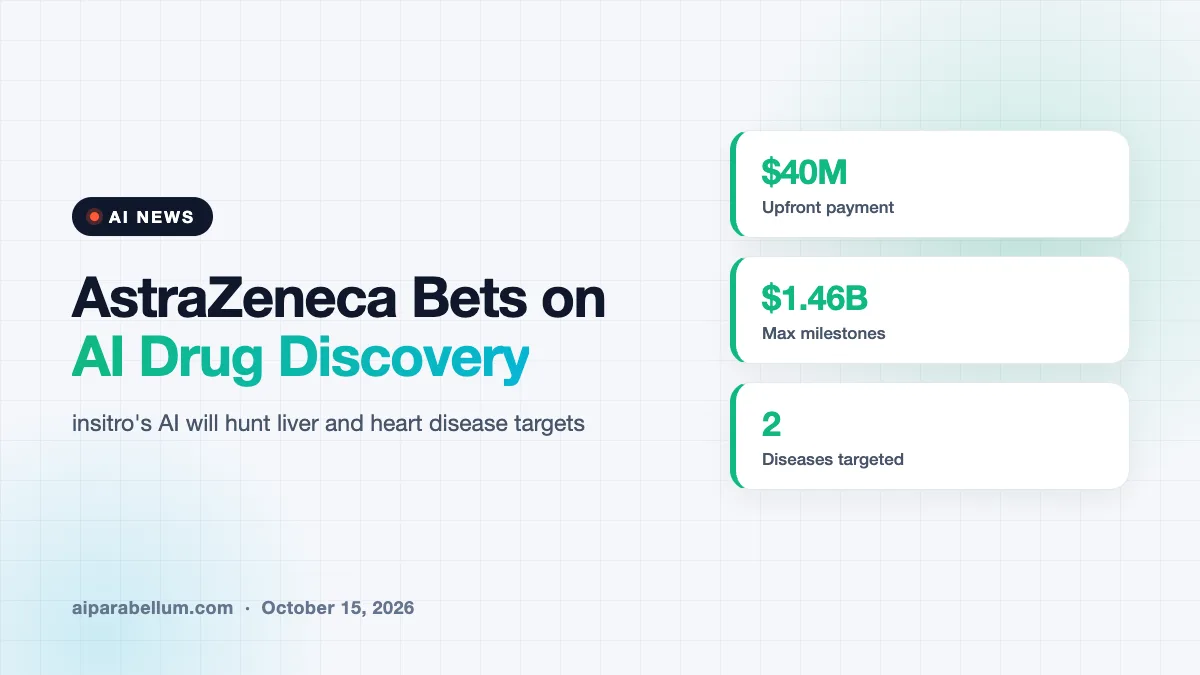
AstraZeneca just made one of the year’s bigger bets on AI drug discovery. The British drugmaker signed a deal with California biotech insitro on October 15 to hunt for new treatments for a serious liver disease and a group of heart conditions, paying $40 million upfront with up to about $1.46 billion more tied to future milestones.
The money is mostly backloaded, which is normal for pharma deals. Still, the agreement shows how big drug companies are leaning on AI to tackle diseases that have resisted decades of traditional research.
What the AI Drug Discovery Deal Covers
The collaboration is worldwide and exclusive. insitro will use its AI platform to find the biological drivers behind two hard-to-treat conditions, then push targets that AstraZeneca picks from early discovery to the development-candidate stage.
After that, AstraZeneca takes over. It will run and pay for clinical trials, handle regulatory work, and sell any medicines that make it to market.
The Two Diseases in Focus
- MASH (metabolic dysfunction-associated steatohepatitis): a severe form of fatty liver disease that can lead to scarring and liver failure.
- Cardiomyopathies: a group of diseases that weaken or stiffen the heart muscle.
Both conditions share a frustrating problem. Patients with the same diagnosis can have very different biology underneath, which makes it hard to find one treatment that works for everyone.
Deal Terms at a Glance
Here is a quick look at the key numbers and roles, based on the companies’ announcement and news coverage.
| Item | Details |
|---|---|
| Upfront payment | $40 million to insitro |
| Milestones | Up to about $1.46 billion |
| Royalties | Single-digit percentage of future sales |
| insitro’s role | AI target discovery up to development candidate |
| AstraZeneca’s role | Clinical trials, regulatory work, sales |
| Diseases | MASH and cardiomyopathies |
How insitro’s Virtual Human Platform Works
insitro calls its system the Virtual Human. It blends huge sets of human genetic and clinical data with lab-grown cell models, then uses machine learning to spot which genes and pathways actually cause a disease, not just which ones show up alongside it.
The company was founded by Daphne Koller, a well-known AI researcher who still leads it as CEO. Koller said in a statement that applying AI to these complex datasets can reveal new genetic insights that would be hard to find any other way.
insitro says it has built one of the largest combined collections of human and cellular data in the field. That claim comes from the company, but its long list of pharma partners suggests the platform has earned real trust.
A Growing List of Big Pharma Partners
AstraZeneca is not the first giant to sign up. insitro already works with Gilead, Bristol Myers Squibb and Eli Lilly, and it recently expanded its Bristol Myers Squibb partnership to cover more ALS targets.
The biotech also runs its own pipeline. It says it has nine programs, with liver fat and fibrosis treatments expected to enter clinical trials in early 2027.
Why AstraZeneca Is Leaning Into AI Drug Discovery
Picking the right target is one of the riskiest choices in drug development. Sharon Barr, who leads biopharmaceuticals R&D at AstraZeneca, told Reuters that once a new target shows up in major journals, “it is no longer novel.”
Her point is simple: AI could help the company find promising leads before everyone else does. Barr also said pairing AI tools with experienced scientists lets teams test fewer molecules in the lab and cut down on guesswork.
The deal also lands during a busy stretch for AI in biotech. Investors and drugmakers keep backing AI-first companies, as the Iambic IPO news earlier today showed.
What This Means for You
You won’t see a new pill from this deal anytime soon. Drug discovery takes years, and most early targets never become approved medicines.
Still, there are a few practical takeaways:
- AI is moving deeper into medicine, from clinical note-taking tools to the earliest stages of finding new drugs.
- Diseases like MASH affect many people and are often underdiagnosed, so better targets could matter to a lot of patients down the road.
- If you follow AI as a career or investment theme, biotech is one of the clearest places where the technology is getting real budgets.
- Want to explore AI science tools yourself? Our list of AI research tools is a good starting point.
Takeaway: The headline number is big, but the real story is trust. Big drugmakers keep handing AI firms their hardest early-stage problems.
For more stories like this one, check our daily AI news roundup.
Sources
This article is based on the companies’ announcement via BioSpace, plus Reuters reporting published by CNA.
Conclusion
AstraZeneca’s deal with insitro puts $40 million on the table now and up to about $1.46 billion more if the work pays off. insitro will use its Virtual Human AI platform to find the root causes of MASH and cardiomyopathies, while AstraZeneca handles trials and sales. It is another sign that major drugmakers see AI as a real tool for picking better targets earlier. Results will take years, but the direction is clear: AI is becoming part of how new medicines get started.