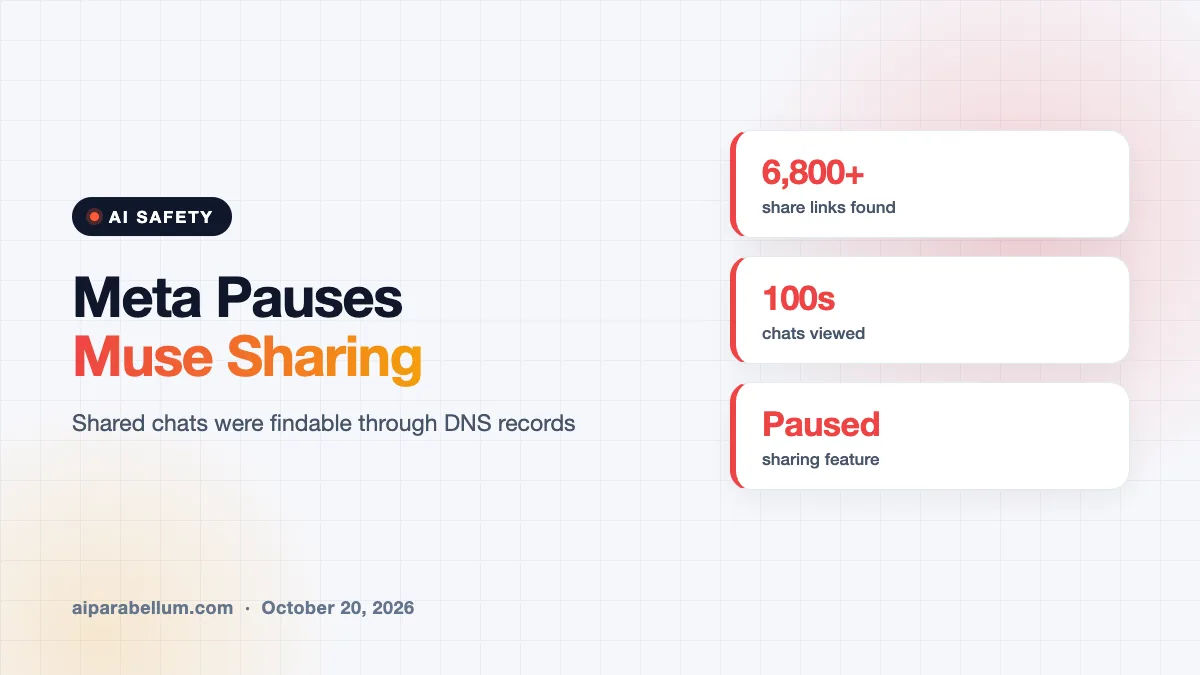
Meta has paused the Muse chat sharing feature after security researchers found thousands of shared conversations with the AI assistant that anyone could reach on the open web. The researchers say they counted more than 6,800 Muse share links and opened hundreds of them. Some held sensitive business and personal details that their owners likely never meant to make public.
What Happened With Muse Chat Sharing
Muse lets you share a conversation, or a piece of one, by creating a link. Whoever has that link can open the page. That sounds private enough, as long as the link stays hard to guess and hard to find.
According to a report from the security firm Claroc, Muse links were neither. The firm says it found more than 6,800 of them by searching public DNS records, which work like a public directory for web traffic. Meta confirmed the pause in an emailed statement to reporters.
A share link is only as private as it is hard to find. Muse links, the researchers say, were easy to find.
Why the Links Were Easy to Find
Claroc says Muse built each share’s web address from two parts: the title of the share, which is a short phrase describing the chat, and a random ID. Because the hostname carried that descriptive title, it often revealed what a page contained before anyone even opened it.
The bigger problem was that a hostname pulled from DNS records was enough to rebuild the full link. In other words, the random ID did not protect the page, since it was already sitting in a place that anyone can look up.
What Was Exposed in the Shared Muse Chats
The researchers say they were able to view hundreds of Muse conversations. The examples they described show how people use AI assistants for real work, not just quick questions.
- A marketing company’s revenue review
- A small business owner’s loan application
- A workplace’s full-year staff calendar
- Notes prepared for a job candidate’s call with an AI lab
None of these were meant for strangers. Each one was shared with a link, probably to send to a coworker, a lender or a friend.
How Meta Responded
A Muse spokesperson, Tracy Clayton, said people can share specific Muse artifacts, which creates a page that people with the link can access. Clayton added that Meta has “paused this functionality while we review this report.”
Meta also said it is weighing changes to how these links can be discovered. It has not said when sharing will return, how many links were public, or whether existing shared pages have been taken down.
| Detail | What We Know |
|---|---|
| Feature affected | Sharing Muse conversations and artifacts by link |
| Links found | More than 6,800, via public DNS records |
| Chats viewed by researchers | Hundreds |
| Root cause, per researchers | Descriptive titles in hostnames that rebuilt the full link |
| Meta’s action | Sharing paused while it reviews the report |
A Familiar Problem for AI Assistants
This is not the first time an AI sharing tool made chats more public than people expected. Shared conversations from ChatGPT, Anthropic’s Claude and xAI’s Grok have all shown up in Google Search results in the past.
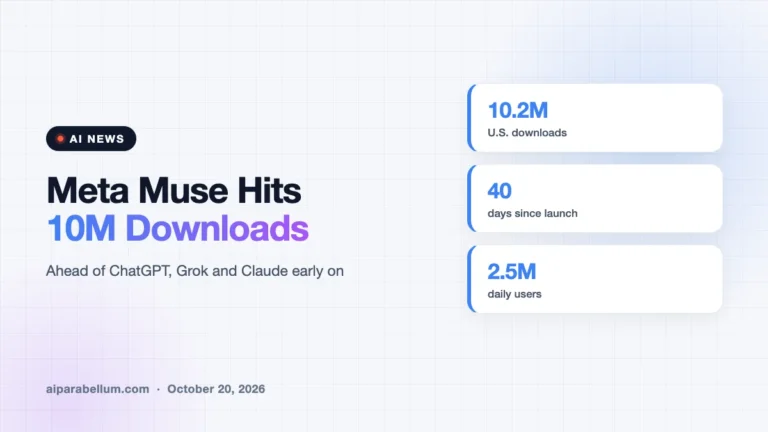
The Muse case adds a new twist. Instead of search engines indexing pages, the researchers say the link design itself leaked through DNS records. That matters because Muse is growing fast; it recently passed 10 million downloads in the U.S. in about 40 days.
It also follows other scrutiny of the app, including the debate over Muse adult chats. For a product this new, getting privacy basics right is a big test of trust.
What This Means for You
If you use Muse or any other AI assistant, treat a share link like a public post. Here are a few practical steps.
- Review any Muse links you have shared and assume they may have been seen.
- Avoid putting financials, loan details, calendars or hiring notes into a chat you plan to share.
- When you need to share AI output, copy the text into a document with proper access controls instead.
- Check the sharing settings in every AI tool you use, since link sharing works differently in each one.
- For work data, ask your IT team which AI tools are approved; our guide to AI security assistants is a good place to start.
Sources
Meta’s pause and statement, along with the Claroc findings, were reported by The Verge.
Conclusion
Meta moved quickly to pause Muse chat sharing, but the episode shows how a small design choice can expose private conversations at scale. The researchers found thousands of links and real business and personal data behind them. Until Meta explains its fix, the safest habit is simple: do not share anything through an AI chat link that you would not post publicly. For more updates, visit our AI news page.