Automattic, the company behind WordPress.com, has launched Spacefast, a new service that hosts vibe-coded apps and websites built with the AI you already use. Instead of asking you to switch to a new AI builder, Spacefast plugs into tools like ChatGPT, Claude and Cursor and gives your work a live, private link. The launch was announced on November 9, 2026, after a quieter soft launch earlier in the fall.
What Spacefast Does for Vibe-Coded Apps
Vibe coding means describing an app in plain words and letting an AI write the code. Getting a first draft is fast, but turning that draft into a working, shareable site usually means extra hosting tools, sign-ups and setup. Spacefast is built to close that gap.
The company describes itself as “not an AI builder.” You keep chatting with your favorite assistant, and Spacefast gives that agent the hosting, building instructions and storage it needs. When you ask it to publish, you get a link back right inside the chat.
The Core Features
- Hosting and deployment, with support for your own custom domain.
- A built-in database for each project, so apps can save sign-ups, scores or orders.
- Private-by-default sharing, with invite lists, share links or fully public pages.
- Version history, so you can roll back to an earlier version you liked better.
- Page comments that your AI can read and turn into fixes.
- Built-in visitor stats, with no separate tracker to add.
Automattic says app login, transactional email and shared team knowledge, such as brand guides and playbooks, will arrive in the coming weeks. Those are promises for now, so it is worth checking back before you plan around them.
Bring Your Own AI to Build Vibe-Coded Apps
The big pitch is choice. Spacefast works with chat apps like ChatGPT itself and Claude, personal assistants such as OpenClaw and Hermes, and coding agents including Claude Code, Codex and Cursor. According to Automattic, it is available as an official plugin in Claude, ChatGPT and Grok Bot, and it also offers an API, a command-line tool and an MCP connection for agents.
There are also non-chat routes. You can drag a folder or zip file onto a drop page, or connect a Git repository so pushes to the main branch go live and other branches get preview links. Supported frameworks include Next.js, Astro, TanStack Start and Vite, plus plain static HTML.
The real bet here is that people will not want to pay twice for AI. If you already pay for an assistant, Spacefast only charges you to publish and run what it builds.
Spacefast Pricing and Plans
You can start without an account. Unclaimed projects get a live address plus a private claim link, and they expire after a set time unless you sign up and claim them. Here is how the paid tiers break down, based on the company’s announcement:
| Plan | Price | What You Get |
|---|---|---|
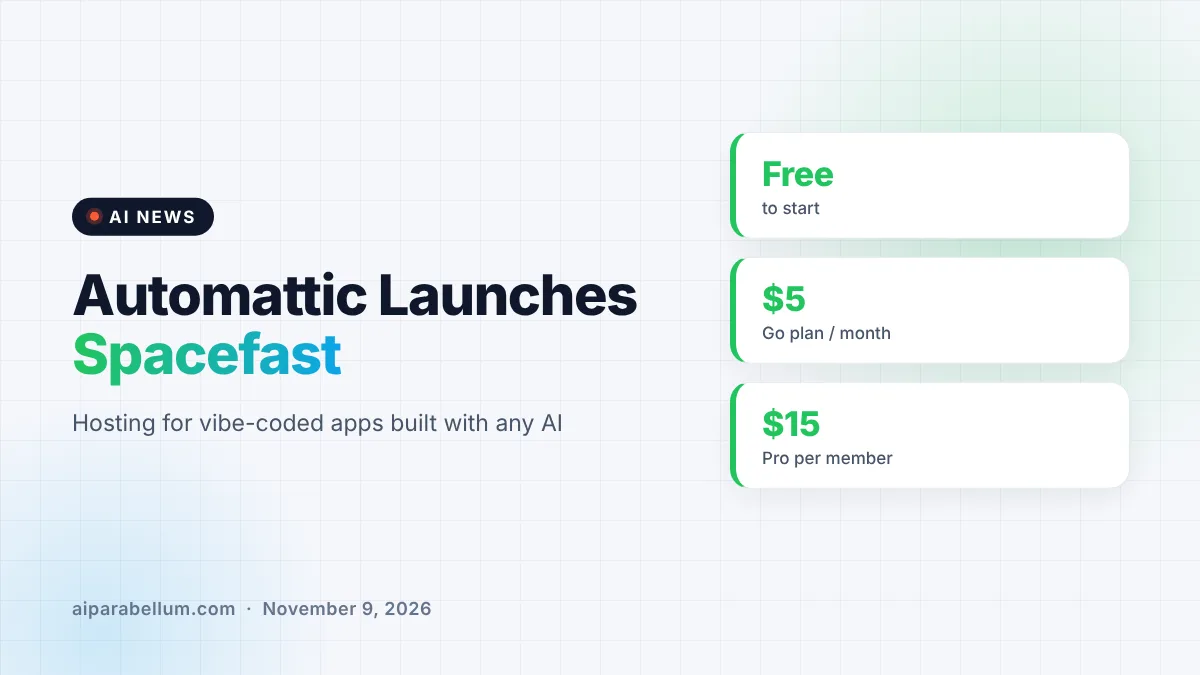
| Personal | Free | $1 a month of usage, custom domains and a database |
| Go | $5 a month | Unlimited spaces and more usage |
| Pro | $15 a month per member | Team features and early access to new features |
| Enterprise | Custom | Pricing set case by case |
Spacefast runs on WordPress.com’s infrastructure, which Automattic says handles more than 15 billion page views a month. The company also points to existing WordPress VIP and Pressable customers, who can use it without approving a new vendor.
Who Spacefast Competes With
The service lands in a crowded market. All-in-one builders like Lovable and Emergent bundle their own AI with hosting, while design and productivity tools such as Figma, Canva and Notion have added their own app-building features. Spacefast is betting that teams would rather mix agents than commit to a single one.
Founder and CEO Batuhan İçöz built the first version on his own during an internal Automattic sprint, and the project later became its own company under Automattic. In an interview with TechCrunch, he said enterprise marketing teams are spinning up landing pages across many AI services, and that companies want one place to manage it all.
The launch also comes during a bumpy stretch for Automattic. The company has faced leadership drama and layoffs this fall, and many web publishers are losing traffic to AI chatbots and summaries. Spacefast is one way Automattic is adapting as more people build sites with AI instead of a classic content system.
What This Means for You
If you already build small tools or pages with an AI assistant, Spacefast could save you the hosting step. Here are a few practical points before you try it:
- Start free. You can publish without an account and only claim a project if you want to keep it.
- Remember that new spaces are private. Create a share link or make the page public before you send it to anyone.
- Check framework support first. Simple pages work easily, but full apps need one of the supported stacks.
- Do not count on promised features yet. Login, email and team knowledge are still coming.
- Compare costs. If you already pay for a tool like Cursor for coding, paying only for hosting may be cheaper than a second AI builder.
Beginners deciding where to start might also like our look at beginner coding tools. You can find more launches like this one in our latest AI news.
Sources
Primary source: Automattic’s Spacefast launch announcement. Additional details from Spacefast’s official site and reporting from TechCrunch.
Conclusion
Spacefast is Automattic’s answer to the vibe coding boom, and it takes a different road from most AI builders. Rather than selling you another AI, it hosts what your current assistant makes and adds sharing, versions and a database on top. The free tier makes it easy to test, though some key features are still on the way. If it delivers on those promises, it could become a handy home for the small apps and pages people now build every day with AI.