
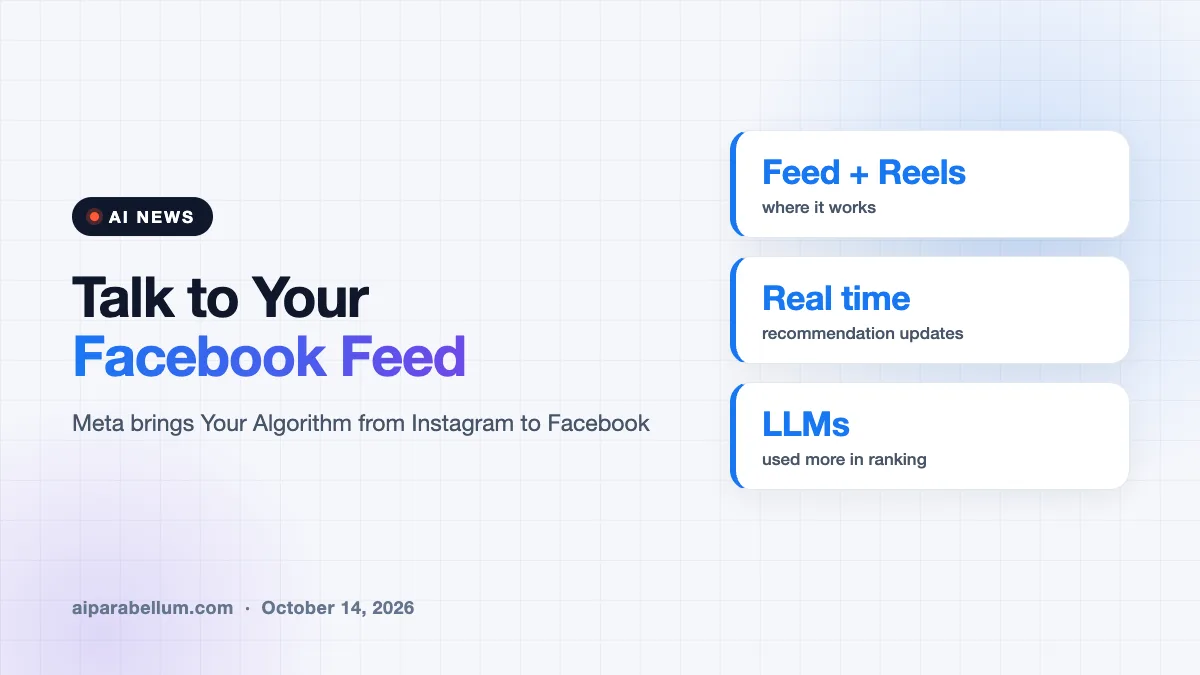
Meta is bringing its Facebook Your Algorithm feature to the world’s biggest social network, giving you a way to shape your Feed and Reels by simply describing what you want to see. The AI-powered tool first appeared on Instagram, and it lets you type preferences in plain language instead of hoping the system guesses right. Meta says your recommendations update in real time once you make a change.
What Facebook Your Algorithm Actually Does
The new feature lets you add and manage the topics you care about in your Feed and in Facebook Reels. You can tell the app, in your own words, what you want more of and what you want less of. Meta says the changes show up right away rather than days later.
This is a shift from how social feeds have usually worked. For years, the algorithm quietly watched your clicks, likes, and scroll time and decided for you. Now you get a direct line to the system that ranks your posts, a bit like setting preferences on a streaming service.
New Buttons in the Three-Dot Menu
Meta also reworked the three-dot menu that sits on individual posts. From there you can jump into Your Algorithm or tap “Interested” or “Not interested” to give quick feedback. Those same buttons may also show up directly under some posts.
When you react, Facebook may ask a follow-up question to learn what exactly you liked or disliked. You can answer in a sentence, and the feed adjusts based on what you said.
How Meta Is Using LLMs to Rank Your Feed
Behind the scenes, Meta says it is leaning more on large language models in its ranking systems. Older recommendation engines mostly crunched behavior signals, but LLMs can understand the meaning, context, and intent behind a typed request. Meta describes the goal as “an algorithm you can actually talk to.”
The company says the system can adapt within a single session. So if you tell it you are tired of a certain topic tonight, it should react before you close the app. This fits a wider push at Meta to put AI at the center of its products, which you can also see in its recent frontier model push.
Facebook Your Algorithm Across Meta’s Apps
Facebook is not the first Meta app to get this kind of control. The company has been rolling out similar tools step by step across its platforms. Here is how the timeline looks so far.
| App | Feature | Where It Works | When It Arrived |
|---|---|---|---|
| Your Algorithm | Reels | December 2025 | |
| Your Algorithm (expanded) | Feed and Explore | June 2026 | |
| Threads | Dear Algo | Recommendations | Already available |
| Your Algorithm | Feed and Reels | October 13, 2026 |
The pattern is clear. Meta tests the idea on one app, refines it, and then spreads it to the rest of its family of apps.
Why This Shift Matters
Social media feeds have faced years of criticism for pushing content people never asked for. Giving users a say in plain language is one answer to that complaint. It also gives Meta richer signals about what people truly want, which can make its recommendations, and its ads, more precise.
There are open questions too. Meta has not said how much weight your typed requests carry compared with your viewing habits. It also has not detailed how long a preference sticks before the system drifts back toward old patterns.
Our take: talking to your feed is a real step toward user control, but it works best when you treat it as a steering wheel, not an off switch.
What This Means for You
If you use Facebook every day, this update gives you new ways to clean up a cluttered feed. A few minutes of setup could change what you see for weeks. Here are some practical ways to use it:
- Open Your Algorithm and list a few topics you want to see more often, such as local news, cooking, or your favorite sports team.
- Use “Not interested” on posts that annoy you, and answer the follow-up question so the system learns why.
- Be specific in your own words, for example “fewer celebrity gossip videos” rather than just “less of this.”
- Check back after a few days to see whether your Reels match what you asked for, and adjust if they drift.
If you manage a page or run ads, pay attention as well. Feeds shaped by user requests may reward content that clearly matches stated interests, which could affect your content calendar planning and how you target Facebook ads. For the bigger picture on how AI is reshaping platforms, see why AI is the new social media, or browse more social media tools.
Sources
This article is based on reporting from TechCrunch and The Verge, which cover Meta’s announcement and its statements about LLM-based ranking. For more daily updates, visit our AI news hub.
Conclusion
Facebook Your Algorithm turns the feed into something you can talk to, letting you describe what you want in plain words and see changes right away. It builds on similar tools Meta already tested on Instagram and Threads, and it shows how LLMs are moving into the core of social ranking. The real test will be whether your stated preferences keep their weight over time. For now, it is worth a few minutes of your time to tell Facebook what you actually want to see.
