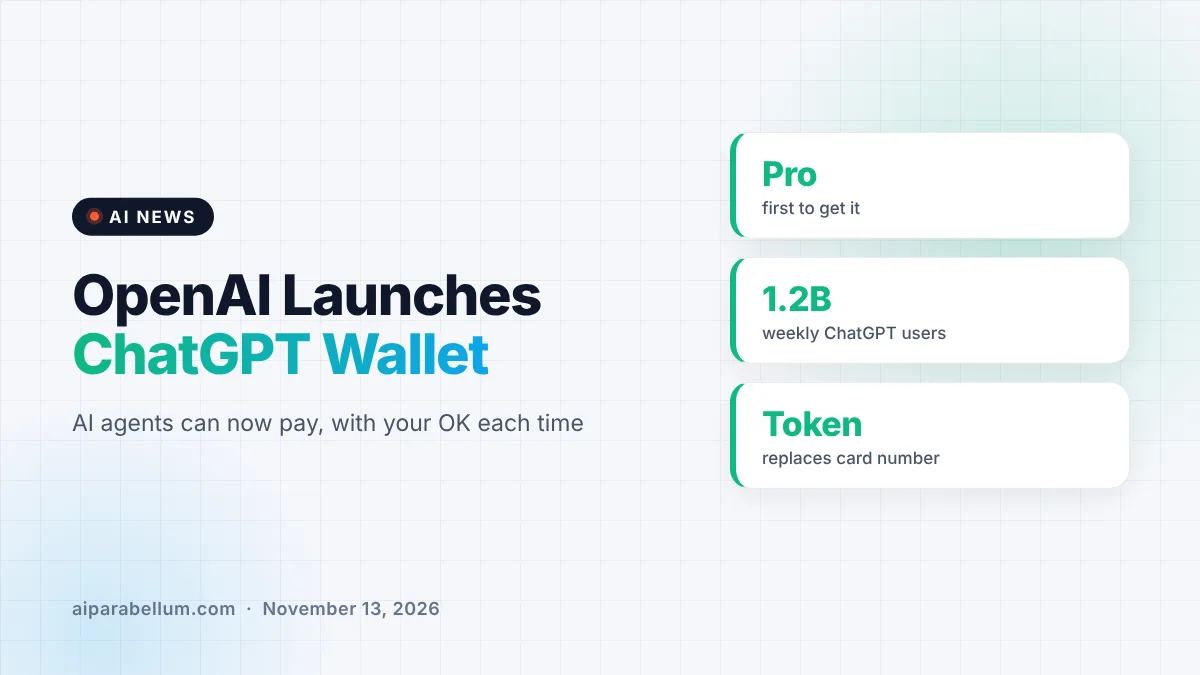
OpenAI has officially launched ChatGPT Wallet, a new way for its AI agents to finish a purchase on your behalf instead of just helping you pick a product. With ChatGPT Wallet, you save a card once and then approve each agent purchase with Face ID or a fingerprint. For now, it is rolling out in limited form to ChatGPT Pro subscribers.
What ChatGPT Wallet Actually Does
OpenAI says about 1.2 billion people use ChatGPT every week, and many already use it to research and compare products. Until now, the last step, actually paying, still happened outside the chat. ChatGPT Wallet is meant to close that gap by giving agents a safe way to pay at regular online stores.
Here is the basic flow OpenAI describes:
- You add a payment card to the wallet one time.
- When an agent is ready to buy, you review the items, the total and the card it plans to use.
- You confirm with a biometric check, such as Face ID or a fingerprint scan.
- Each approval is saved as a record of exactly what you allowed the agent to buy.
That means the agent cannot spend money on its own at launch. Every purchase still needs your explicit sign-off. Earlier today we spotted the product in OpenAI’s policy pages before any announcement, and today’s launch confirms how it works.
How your card details stay private
After you approve, the card network creates a payment token. This token works like a stand-in card, with its own number, security code and expiration date. The store gets charged through that token, so neither the business nor the agent sees your real card number.
OpenAI says you keep your card’s normal rewards and dispute protections, for example if an item arrives broken. You still buy directly from the store, which handles pricing, shipping, returns and customer service.
ChatGPT Wallet Launch at a Glance
| Detail | What OpenAI says |
|---|---|
| Who gets it first | ChatGPT Pro users, in limited availability |
| How you approve | Review each purchase, then confirm with Face ID or fingerprint |
| What the store receives | A network payment token, not your real card number |
| Fraud partners | Forter, Riskified, Sardine and Signifyd |
| Payment partners | Adyen, Checkout.com and Stripe |
| Future plan | Optional pre-approved spending with limits and categories |
Why Stores May Still Block Agent Purchases
OpenAI is upfront that agent shopping is still early. Many websites treat automated visitors as bots, so a legitimate purchase made by an agent can get blocked, declined or canceled. That is the same kind of friction that led some companies, like United Airlines, to push back on personal AI agents.
To help, OpenAI published a Commerce Partner Playbook for businesses. It suggests a few steps stores can take:
- Claim the business in ChatGPT and upload a product feed with current prices and stock.
- Set up the website’s firewall or CDN to recognize signed ChatGPT agent requests.
- Work with payment and fraud providers so agent purchases are not flagged by mistake.
- Optionally build a plugin or add WebMCP tools so agents can check stock and manage carts.
This builds on the business tools OpenAI rolled out earlier this week, including its business hub for brands. Coverage of the launch also notes the wallet first appears inside dots, the always-on agents OpenAI introduced in September.
The Bigger Race in Agent Commerce
ChatGPT Wallet puts OpenAI squarely into a fast-growing fight over who controls AI shopping. Payment companies and tech giants are building their own rules, from American Express’s purchase intent framework to Google’s universal cart idea.
OpenAI’s long-term goal goes further than one-tap approvals. The company says it expects users will eventually let agents buy things without approving each one, by setting spending limits, product categories or time windows ahead of time. It says those future controls will build on the same biometric checks and purchase records.
The real test is not whether ChatGPT can pay. It is whether stores and fraud systems will trust a payment that an AI agent started.
What This Means for You
If you pay for ChatGPT Pro, you may start seeing a new option to let agents check out for you. If you use the free or Plus plans, you will likely wait while OpenAI tests the feature with a smaller group.
- Expect to confirm every purchase yourself for now, so an agent cannot quietly overspend.
- Some checkouts may fail while stores update their bot filters, so keep a backup way to pay.
- Your usual card protections still apply, which matters if an agent orders the wrong item.
- If you run an online store, the playbook is worth a look now, before agent traffic grows.
You can follow more updates like this in our AI news section, or read our overview of ChatGPT features.
Sources
Primary source: OpenAI’s ChatGPT Wallet announcement. Additional reporting from Unite.AI.
Conclusion
ChatGPT Wallet moves OpenAI from helping you shop to actually paying for what you choose. The launch is cautious, limited to Pro users and built around approving every purchase with a biometric check. Payment tokens keep your real card number away from stores and agents. The bigger hurdle is on the merchant side, where bot filters and fraud tools still need to learn to trust agents. How quickly stores adapt will decide whether agent shopping becomes routine or stays a niche perk.