Apple has updated its App Store rules to crack down on AI nudify apps and other apps that hide harmful features until after approval. The new App Review Guidelines now say apps must actively prevent and remove nonconsensual intimate imagery, including images made with AI tools. Developers who ignore the rules risk losing both their apps and their developer accounts.
New App Store Rules for AI Nudify Apps
Apple says pornographic content, including apps that create explicit images of real people without consent, was already banned. The update makes the rules more explicit and adds clearer penalties. Here are the main changes Apple listed:
| Guideline | What it now says | Possible penalty |
|---|---|---|
| 1.2 (user-generated content) | Apps must proactively prevent and remove nonconsensual intimate imagery, including AI-generated images | Code of Conduct violation and removal from the App Store |
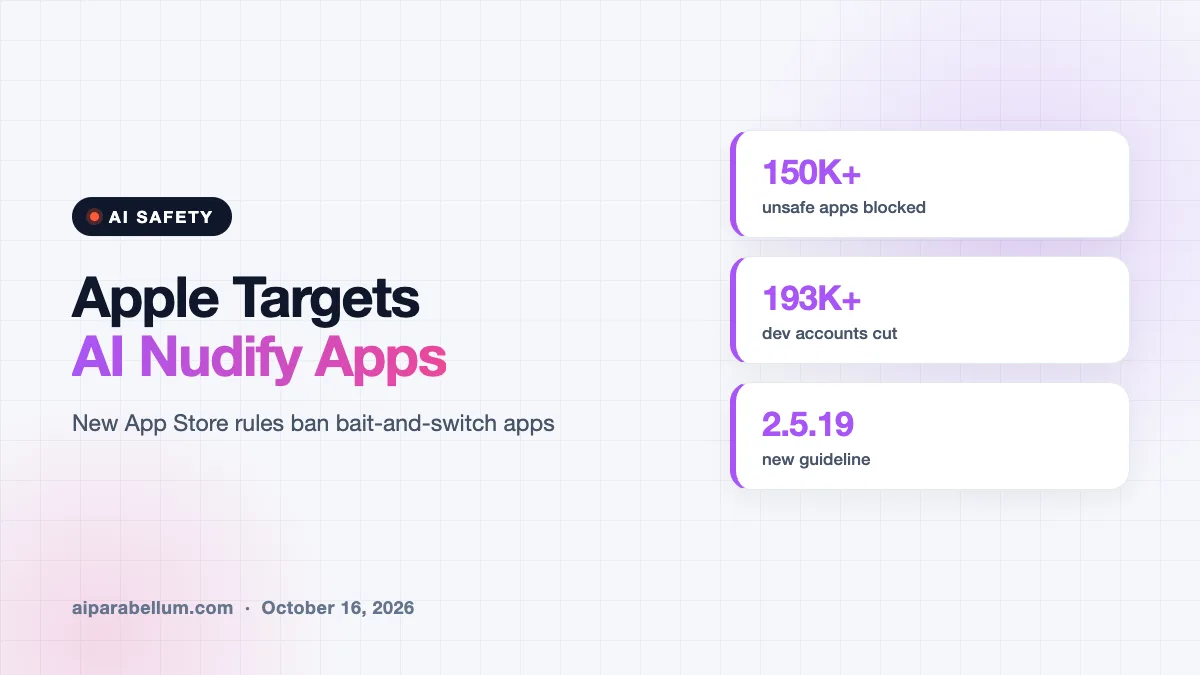
| 2.5.19 (new) | No hidden, dormant or undocumented features, and no changing what an app does after review | App removal and removal from the Apple Developer Program |
| Section 5 (legal) | Apps that facilitate human trafficking or child exploitation | Removed from the App Store and blocked from alternative distribution |
The Bait-and-Switch Problem
A bait-and-switch app looks harmless during review, then unlocks something else once it is live. Apple names “nudification” as one example of a feature that shows up only after approval. The ban on hidden features used to live under Guideline 2.3.1, and the new wording now calls out tricks like code obfuscation directly.
Why Apple Is Targeting AI Nudify Apps Now
Pressure has been building all year. A watchdog group, the Tech Transparency Project, found dozens of AI nudify apps on the App Store in January. A follow-up in April said App Store search suggestions and ads were steering people toward them.
- In July, San Francisco officials ordered Apple to remove eight apps that could create nonconsensual intimate images.
- Also in July, an investigation found apps posing as simple games that revealed hidden gambling platforms in Brazil.
- Grok drew criticism after it was used to create sexualized images of women and minors, and Apple said it privately warned xAI that Grok could be removed.
Apple’s Enforcement Numbers
Apple says it stopped more than 150,000 apps with safety issues from reaching customers last year. It also says it terminated more than 193,000 developer accounts for fraud and abuse. The company says some of these cases involved coordinated fraud groups hiding harmful content until after approval.
What This Means for You
For most iPhone users, these rules should mean fewer harmful AI apps slipping through. But no review process is perfect, so a little caution still goes a long way. Here is how to protect yourself and your family:
- Report any app that creates sexual images of real people without consent.
- Be wary of photo or “AI editing” apps that change behavior after an update.
- Use Screen Time and age ratings to limit what kids can download.
- Stick to well-known AI image generators with clear content policies.
If you build apps, review your moderation tools now. Apps that host user content must filter abuse, let users report it and let them block abusive accounts.
Our coverage of vibe-coded Android apps shows how fast app stores are adapting to AI. For more, see how states are pushing on ChatGPT child safety, or browse our latest AI news.
Sources
This article is based on Apple’s developer announcement, Apple Developer News, and reporting from 9to5Mac on the background behind the changes.
Conclusion
Apple’s updated App Review Guidelines spell out that apps must prevent and remove AI-generated nonconsensual intimate imagery. A new rule, 2.5.19, targets bait-and-switch apps that hide features from reviewers, with removal from the Developer Program as a penalty. Apps tied to trafficking or child exploitation will also be blocked from alternative distribution. The changes follow a year of reports about nudify apps and hidden gambling apps on the App Store. How well Apple enforces these rules will decide whether they make a real difference.