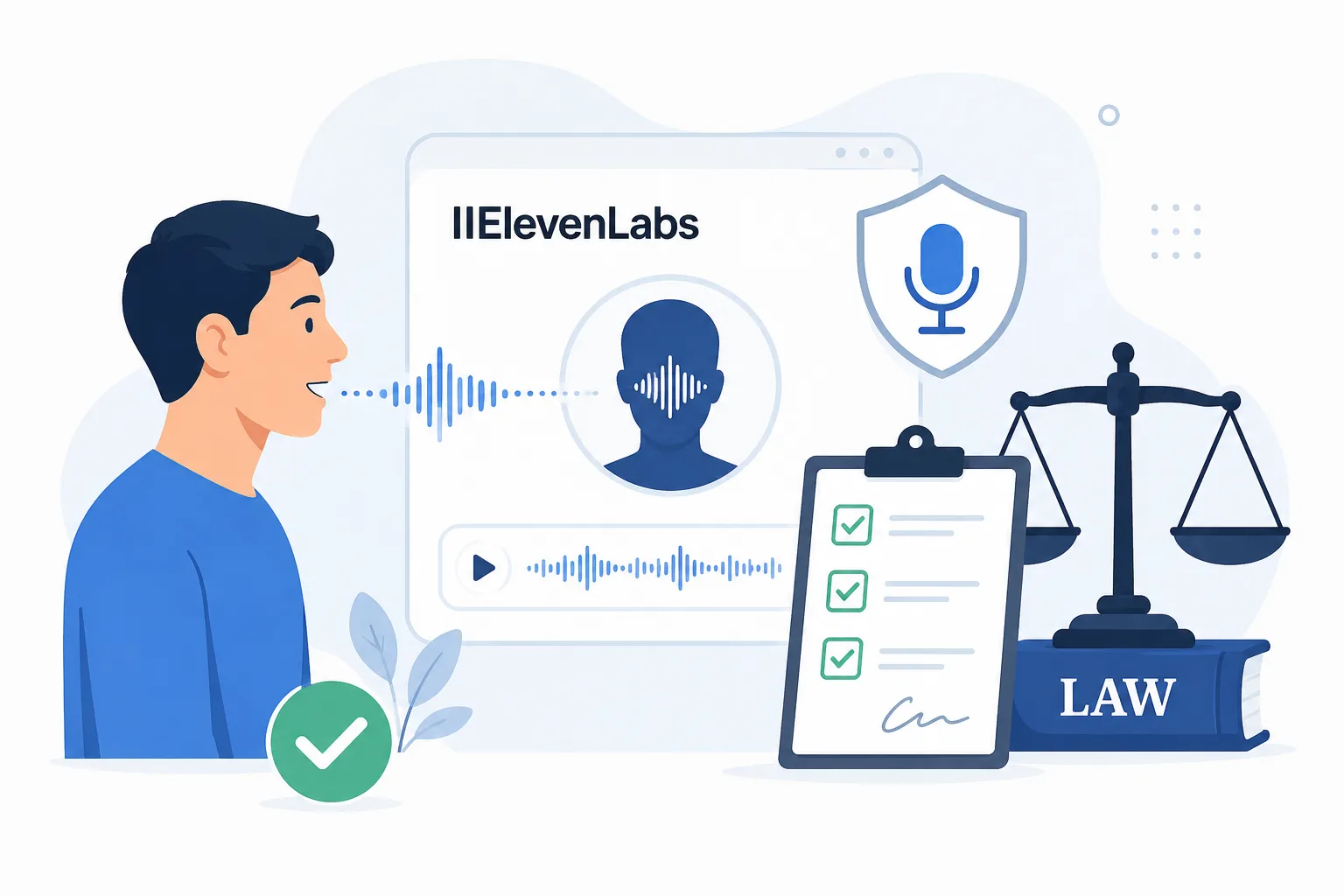
ElevenLabs makes it remarkably easy to clone a voice. Upload a short audio sample, wait a few minutes, and you have a synthetic version that sounds almost identical to the original. That power comes with serious legal responsibility.
Voice cloning technology is not illegal by itself. But using it the wrong way can land you in legal trouble faster than most people realize. Here is how to use ElevenLabs voice cloning without crossing any lines.
What ElevenLabs Voice Cloning Actually Does
ElevenLabs uses deep learning models to analyze the pitch, tone, cadence, and vocal texture of a recorded voice. It then generates new speech in that voice from any text you type. The result is a synthetic clone that can say things the original speaker never said.
The platform offers two cloning options. Instant Voice Cloning works from a short sample and is available on paid plans. Professional Voice Cloning requires a longer sample and a verification step to confirm you have rights to clone that voice.
Why Legal Compliance Matters
Cloning someone’s voice without permission is not just unethical. In a growing number of jurisdictions, it is illegal. Several US states have passed laws that specifically protect a person’s voice as part of their right of publicity, meaning you cannot use someone’s likeness, including their voice, for commercial purposes without consent.
Deepfake audio has already been used in voice scams, political disinformation, and fraud. Lawmakers are responding with stricter regulations. If you use a cloned voice in a way that deceives, defames, or profits without authorization, you risk civil lawsuits and potentially criminal charges.
The technology is neutral. The intent and the consent behind it determine whether it is legal or not.
Legal Requirements for Voice Cloning
| Requirement | What It Means | Who It Applies To |
|---|---|---|
| Consent from the voice owner | Written or recorded permission to clone and use the voice | Anyone cloning another person’s voice |
| Right of publicity compliance | Cannot use someone’s voice commercially without a license | Businesses, marketers, content creators |
| No deceptive use | Cannot impersonate someone to mislead listeners | Everyone |
| Disclosure of synthetic audio | Some jurisdictions require labeling AI-generated voice content | Publishers, advertisers, political campaigns |
| Platform terms of service | ElevenLabs prohibits cloning without authorization | All ElevenLabs users |
How to Clone Your Own Voice Legally
Cloning your own voice is the simplest legal scenario. You own the rights to your voice, so no third-party consent is needed. This is common for podcasters, course creators, and YouTubers who want to generate voiceovers without recording every time.
Record a clean audio sample of at least one minute. Upload it to ElevenLabs and create your Instant Voice Clone. Use it for your own content, and you are fully in the clear.
Best Practices for Self-Cloning
- Use a high-quality microphone in a quiet room for the best clone accuracy.
- Keep your cloned voice on your own account and do not share API access broadly.
- Label AI-generated audio when publishing to maintain audience trust.
- Review output before publishing to catch any unnatural artifacts.
How to Clone Someone Else’s Voice Legally
This is where most legal risk lives. If you want to clone a voice that is not yours, you need explicit permission from the voice owner. A verbal agreement is not enough in most professional contexts. Get it in writing.
ElevenLabs enforces this on their Professional Voice Cloning tier by requiring a consent verification step. The voice owner must confirm they authorize the cloning. Skipping or faking this step violates the platform’s terms and potentially the law.
What a Voice Consent Agreement Should Include
- Name of the voice owner and the party receiving permission.
- Specific uses allowed (commercial, educational, personal).
- Duration of the agreement and whether it can be revoked.
- Whether the voice can be used in derivative works or by third parties.
- Compensation terms, if any.
If you would not publish a photo of someone without their permission, do not publish their cloned voice without it either.
Legal Use Cases for ElevenLabs Voice Cloning
Not every use of voice cloning is risky. Several applications are clearly within legal bounds when handled properly.
- Audiobook narration using your own voice or a voice actor’s with a signed agreement.
- Corporate training videos where the speaker has consented to voice reuse.
- Accessibility tools that give a personalized voice to individuals who have lost the ability to speak.
- Multilingual content where you clone your own voice and use it across languages.
- Marketing and ads using a licensed voice talent who has agreed to AI cloning in their contract.
What You Should Never Do
Some uses of voice cloning are clearly illegal regardless of the platform or jurisdiction. Avoid these without exception.
- Cloning a celebrity or public figure’s voice for commercial content without a licensing deal.
- Creating fake audio that impersonates someone to commit fraud or spread misinformation.
- Using a cloned voice in political ads without disclosure, which several states now prohibit.
- Cloning a voice from publicly available audio (a podcast, interview, or speech) without the speaker’s consent. Public availability does not equal permission.
State Laws to Know About
AI voice legislation is evolving rapidly. A few key developments are worth tracking.
Tennessee passed the ELVIS Act in 2024, which explicitly protects a person’s voice from unauthorized AI replication. California has expanded its right of publicity statute to cover AI-generated likenesses, including voice. New York, Texas, and Illinois have similar protections in various stages of enforcement.
At the federal level, the proposed No Fakes Act aims to create a nationwide standard for protecting voice and likeness from unauthorized AI use. Even before it passes, existing state laws and common-law fraud statutes already create real exposure for misuse.
ElevenLabs’ Own Safeguards
ElevenLabs has built several protections into their platform to reduce misuse. Professional Voice Cloning requires identity verification and voice owner consent. The platform monitors for content that violates their acceptable use policy, including deepfakes of public figures.
They also offer a voice detection tool that can identify whether audio was generated using ElevenLabs models. If your cloned audio is ever disputed, this tool provides a layer of attribution and accountability.
Conclusion
ElevenLabs voice cloning is a powerful tool for content creators, businesses, and accessibility applications. Using it legally comes down to three principles: clone your own voice freely, get written consent before cloning anyone else’s, and never use a cloned voice to deceive. The technology is moving faster than the law, but the legal direction is clear. Consent and transparency are not optional, and the penalties for ignoring them are only getting steeper. If you are exploring other AI audio tools, comparing options like Descript can help you find the right fit for your workflow.